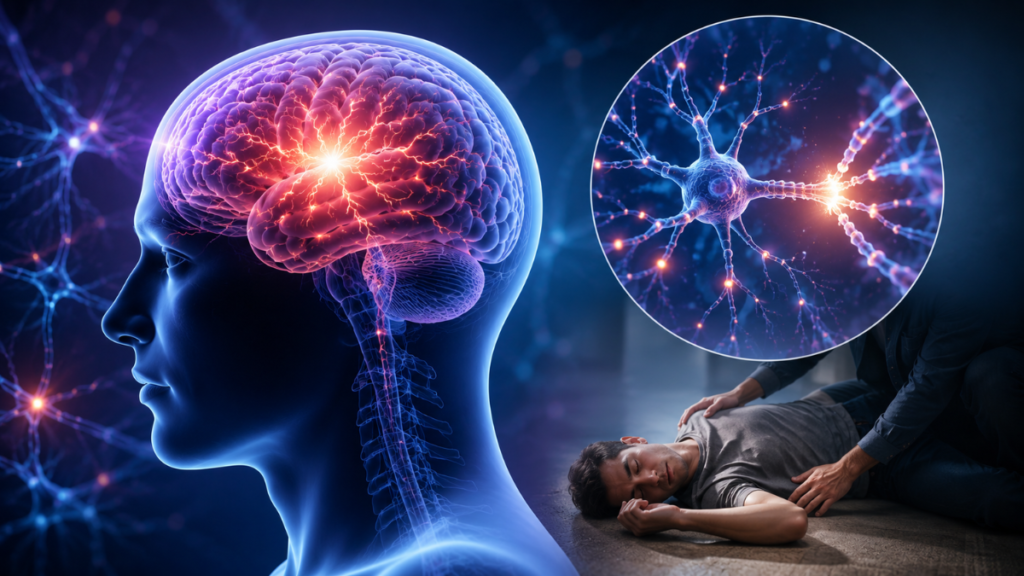

Your doctor has recommended an EEG test after a suspected seizure, sudden body jerking, or an episode when you briefly stopped responding. You may wonder whether this means you have epilepsy, whether the test is painful, or what the results could reveal.
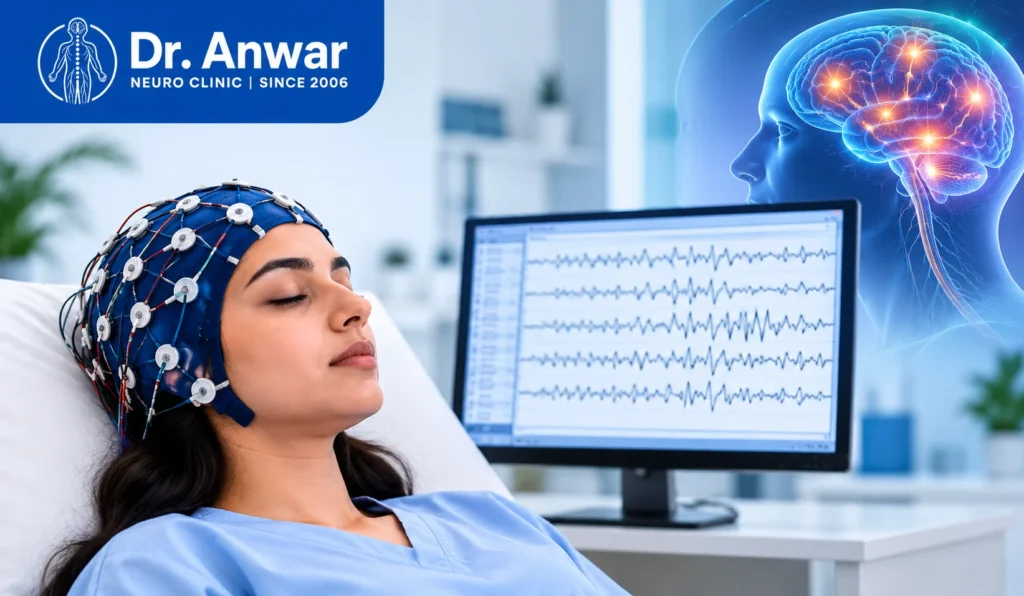
An EEG (electroencephalogram) measures and captures your brain’s electrical signals through small electrodes positioned on your scalp. It helps neurologists investigate suspected seizures and certain other changes in brain function.
The procedure is usually comfortable, causes little to no pain, and does not expose patients to radiation. However, its findings must be considered alongside your symptoms and medical history.
How Does an EEG Test Measure Brain Activity?
Your brain contains nerve cells that communicate through electrical and chemical signals. An EEG detects patterns of electrical activity produced by groups of these cells.
During the test, small sensors called electrodes are placed on your scalp. They record signals that appear as wave patterns on a computer. A trained clinician reviews these patterns to identify changes that may be relevant to your symptoms.
EEG electrodes only record electrical activity. They do not send electricity into your brain.
Unlike an MRI, which produces detailed pictures of brain structures, an EEG records electrical activity over time. A neurologist may recommend either test or both, depending on the clinical concern.
Read More: Early Signs of Autism in Toddlers: 10 Warning Signs Parents Should Know
Why Do Neurologists Recommend an EEG Test?
An EEG is most commonly recommended when a person’s symptoms suggest possible seizure activity. Importantly, seizures do not always involve shaking or falling unconscious.
Doctors may consider EEG testing for:
- Suspected seizures: Episodes involving shaking, unusual sensations, or changes in awareness.
- Repeated staring spells: Brief periods when someone suddenly stops responding.
- Unexplained body jerks: Recurrent movements that may be seizure-related.
- Unusual nighttime episodes: Events during sleep that could represent seizures.
- Unexplained altered consciousness: Selected situations where abnormal electrical activity is suspected.
For example, a child may suddenly stop speaking, stare ahead for several seconds, and then resume the conversation. Such episodes sometimes require investigation for absence seizures.
However, daydreaming, fainting, and ordinary sleep-related jerks can resemble seizures. Your neurologist considers the complete history before deciding whether an EEG is necessary.
What Can an EEG Test Detect?
An EEG may identify electrical patterns that help doctors understand how the brain is functioning.
| EEG finding | What it means |
| Epileptiform discharges | Unusual electrical patterns that may support an epilepsy diagnosis |
| Seizure activity | Changes in the brain’s electrical activity that occur during a seizure, provided the EEG captures the episode. |
| Focal slowing | Reduced electrical activity in a specific region of the brain. |
| Generalized slowing | Slower activity across wider areas of the brain |
These findings do not automatically identify a specific disease. For example, slowing may indicate that part of the brain is not functioning normally, but it does not explain the underlying cause.
Can an EEG Detect a Brain Tumour or Stroke?
An EEG may sometimes show nonspecific electrical changes in someone with a brain tumour or stroke. However, it cannot reliably diagnose or rule out either condition.
MRI or CT scans are generally used to examine structural brain abnormalities.
An EEG is also not routinely necessary for every headache, memory complaint, or episode of dizziness.
Also Read: Developmental and Cognitive Delays in Children: Early Signs, Causes, Diagnosis & Treatment
What Happens During an EEG Test?
A routine EEG is typically performed in a calm setting, with the patient seated in a chair or resting on an examination bed.
Step 1: Preparing your scalp. The technician cleans small areas of your scalp so the electrodes can record signals accurately.
Step 2: Attaching the electrodes. Small sensors are placed using a special paste or adhesive. Some centres use an electrode cap.
Step 3: Recording brain activity. You will be asked to relax and remain relatively still. The technician may ask you to open and close your eyes, breathe deeply, or look toward flashing lights when appropriate.
These activities can sometimes reveal electrical abnormalities that are not apparent during resting recordings.
Step 4: Finishing the test. The electrodes are removed, and the remaining paste is cleaned from your scalp as much as possible.
The recording is then reviewed by a qualified clinician.
How Long Does an EEG Test Take?
A routine EEG recording commonly lasts around 20-40 minutes. Including preparation and electrode removal, the complete appointment may take approximately 45-90 minutes.
Longer recordings may continue for several hours or days.
Is an EEG Test Painful or Dangerous?
A routine EEG is generally painless. The electrodes do not deliver shocks, and the procedure does not expose you to radiation.
You may feel mild discomfort when the electrodes are removed or notice temporary scalp irritation.
Flashing lights or deep breathing can occasionally trigger seizures in susceptible individuals. These activities are performed under appropriate supervision and may be modified when necessary.
You May Like: Why Do My Legs Feel Heavy While Walking? 7 Neurological Causes to Know
What Steps Should You Take Before an EEG Test?
Preparation is usually simple, although your testing centre may provide specific instructions.
Before the appointment:
- Wash your hair and avoid applying oil, gel, or styling products.
- Inform the medical team about all medicines you take.
- Do not stop anti-seizure medicines unless your treating doctor instructs you to.
- Follow any advice about caffeine or sleep.
- Bring previous EEG reports and relevant medical records.
You can usually have your regular meals before a routine EEG, unless your healthcare provider gives you specific dietary instructions.
If you are scheduled for a sleep-deprived EEG, make sure to follow the preparation guidelines provided by your healthcare team. Reduced sleep can increase seizure risk in susceptible individuals.
What Types of EEG Tests Are Available?
The most suitable EEG test is selected based on the symptoms you experience and how frequently these episodes happen.
Routine EEG: A short recording commonly used during initial seizure evaluation.
Sleep or Sleep-Deprived EEG: Monitors the brain’s electrical patterns while a person is asleep or following a period of limited sleep, helping identify abnormalities that may be less noticeable during wakefulness.
Ambulatory EEG: Monitors the brain’s electrical activity continuously through a portable recording device, typically for 24 to 72 hours.
Video EEG monitoring: Combines EEG recording with synchronized video, helping doctors compare unusual episodes with the electrical activity occurring at that time.
Not every patient requires prolonged monitoring. The neurologist selects the investigation according to the clinical findings.
Read This: Stroke Symptoms and Treatment: Warning Signs, Causes & Recovery
What Happens After an EEG Test?
Most patients can return to their usual activities after a routine EEG. Washing your hair after the EEG may help clear away any leftover paste used to attach the electrodes.
If you underwent sleep deprivation, received sedation, or experienced a seizure, your medical team may provide additional safety instructions.
You should not assume that you are safe to drive simply because the EEG has finished. If you are being evaluated for suspected seizures or episodes of lost awareness, ask your treating clinician about driving restrictions.
A qualified clinician examines the recorded EEG data and prepares the report based on the findings. Results are not always available immediately.
How to Interpret Normal and Abnormal EEG Test Findings?
An EEG test report describes the electrical patterns recorded during the examination.
What Does a Normal EEG Mean?
A normal EEG means that no significant abnormality was detected during the recording.
However, a normal EEG does not rule out epilepsy. Seizure-related changes may occur intermittently and may not appear during a short test.
If your symptoms remain suspicious, your neurologist may recommend longer monitoring.
What Does an Abnormal EEG Mean?
An abnormal EEG may show epileptiform discharges, focal slowing, generalized slowing, or other electrical changes.
For example, epileptiform discharges can support an epilepsy diagnosis, while slowing may occur for several different reasons.
An abnormal EEG does not automatically mean that medication is required. Your neurologist considers the report alongside your symptoms before deciding whether further testing or treatment is appropriate.
Related Article: Migraine Treatment: Causes, Symptoms, Triggers & Care
What Is the Estimated Price of an EEG Test in Patna?
The EEG test cost in Patna depends on several factors, including the diagnostic centre, recording duration, and type of examination.
The price of an EEG examination can vary based on whether it involves a standard recording, sleep deprivation, or prolonged video monitoring. A neurologist doctor in Patna can help determine which type of EEG is appropriate based on your symptoms and medical history.
If you are comparing the EEG brain test price or searching for an EEG test price near me, check whether the quoted amount includes the recording procedure, specialist interpretation, and final EEG report.
Since prices vary between diagnostic facilities, confirm the current charges directly with the centre before scheduling your test.
When Should You Seek Medical Attention?
Consult a neurologist if you experience a suspected seizure, repeated unexplained staring spells, unusual movements accompanied by altered awareness, or recurrent episodes of confusion.
A neurologist can determine whether EEG testing is appropriate or whether another investigation would be more useful.
Seek emergency medical attention if a seizure lasts five minutes or longer, repeated seizures occur without recovery, or the person has difficulty breathing or regaining consciousness. Anyone experiencing a possible seizure for the first time should receive prompt medical evaluation.
Read More: Brain Tumour or Stroke? 10 Small Neurological Warning Signs You Should Never Ignore
Conclusion
An EEG test helps neurologists investigate suspected seizures and selected neurological conditions by recording the brain’s electrical activity.
The procedure is generally painless, but the results require professional interpretation. A normal EEG does not completely exclude epilepsy, and an abnormal EEG does not automatically establish a specific diagnosis.
Understanding the procedure, preparation, and meaning of EEG findings can help patients make informed decisions about their neurological care.
Frequently Asked Questions About EEG Tests
Can an EEG Test Confirm Epilepsy?
An EEG may reveal specific brain-wave abnormalities that help neurologists determine whether a person has epilepsy. However, the diagnosis also depends on symptoms, medical history, and other clinical findings.
Is It Possible to Have Epilepsy Even When EEG Results Are Normal?
Yes. Seizure-related abnormalities may not appear during a short recording. A normal EEG therefore cannot completely exclude epilepsy.
Do Patients Need to Stay Awake Throughout an EEG Test?
Usually, yes. Routine EEG recordings commonly include periods of wakefulness. Depending on the type of EEG performed, the recording may also capture your brain’s electrical activity while you are feeling sleepy or are asleep.
Is Eating Allowed Before an EEG Examination?
You can generally have your usual meals before undergoing a routine EEG examination. Follow any specific instructions about caffeine, fasting, or sedation from your testing centre.
When Will I Receive My EEG Report?
Reporting time varies between facilities. Some routine reports may be available the same day, while longer recordings may require additional specialist review.
Is an EEG Better Than an MRI for Diagnosing Epilepsy?
Neither test replaces the other. EEG examines electrical activity, while MRI identifies structural abnormalities. Your neurologist may advise undergoing both investigations based on your symptoms and medical findings.