

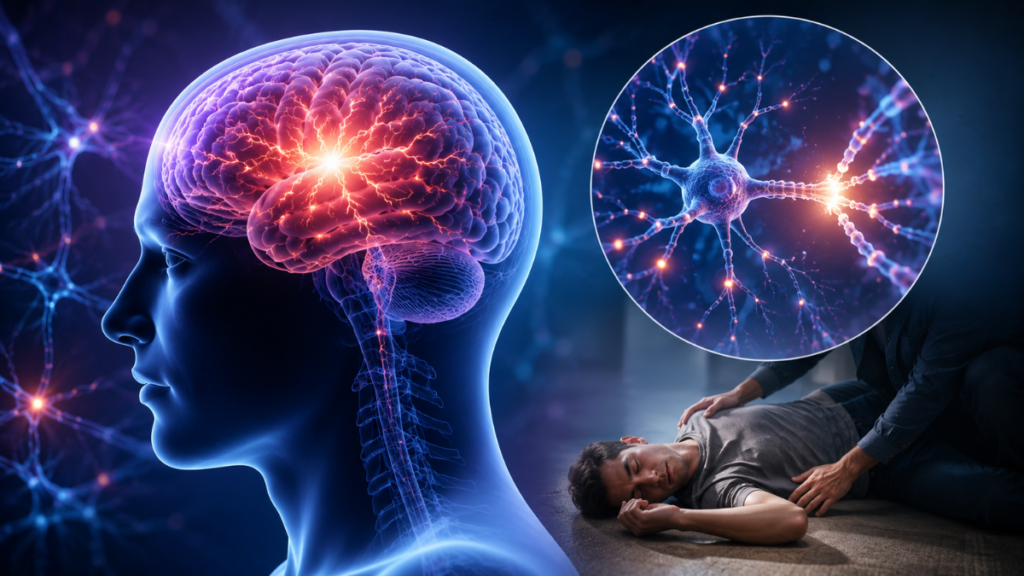
A seizure can be frightening for the person experiencing it and for family members watching it happen. Many people imagine a seizure only as sudden falling, body shaking, and loss of consciousness, but seizures can appear in many different ways. Some patients may simply stare blankly for a few seconds, feel confused, experience unusual sensations, or have repeated small movements that others may not immediately recognize as a seizure.
At Dr. Anwar Neuro Clinic, we believe the most important first step is understanding that a seizure is a symptom of abnormal electrical activity in the brain. It is not always the same as epilepsy, and one seizure does not automatically mean a person will keep having seizures throughout life. The real question is why seizure happens in that individual, and the answer depends on age, medical history, brain health, triggers, and test findings.
What Is a Seizure?
The brain works through carefully controlled electrical signals. These signals help control movement, awareness, speech, memory, emotions, and body functions. A seizure occurs when a group of brain cells suddenly sends uncontrolled electrical signals for a short period. Depending on which part of the brain is involved, symptoms can look very different from one patient to another.
A person may remain awake during a seizure, lose awareness briefly, become confused, or collapse. Some seizures last only a few seconds, while others continue longer and need urgent care. This is why it is important not to judge a seizure only by body shaking.
A seizure may appear as:
- Sudden jerking of arms or legs
- Stiffening of the body
- Blank staring without response
- Temporary confusion
- Loss of consciousness
- Lip smacking or repeated hand movements
- Sudden fear, strange smell, or unusual taste
- Loss of bladder control in some cases
If a family member notices repeated episodes of unusual behavior, staring, confusion, or abnormal movements, it is better to record the episode safely on a phone if possible and show it to a neurologist. This can help in diagnosis.
Why Do Seizures Happen?
Patients and families often ask why seizures occur even when a person looks normal before the episode. Seizures can happen when the brain is irritated or disturbed by an underlying condition, injury, chemical imbalance, infection, or trigger. In some patients, no obvious cause is found in the beginning, but proper evaluation can still help understand the risk of recurrence.
Common reasons include previous head injury, stroke, brain infection, brain tumor, developmental brain changes, genetic tendency, high fever in children, very low blood sugar, sodium or calcium imbalance, alcohol withdrawal, drug use, lack of sleep, or missed anti-seizure medicines in known patients.
In adults, a first seizure needs careful assessment because the cause may be related to metabolic problems, stroke, old brain injury, infection, or other neurological conditions. In children, fever-related seizures are common, but repeated or unusual episodes should be evaluated.
Some common seizure causes include:
- Previous stroke or brain injury
- Brain infection, such as meningitis or encephalitis
- Brain tumor or structural brain abnormality
- Low blood sugar or electrolyte imbalance
- High fever in young children
- Sleep deprivation
- Alcohol withdrawal or substance use
- Genetic seizure tendency
- Missed seizure medicines in diagnosed patients
The reason why we get seizures is not always visible from the outside. A person may seem healthy, but the brain may still have an internal trigger or abnormal electrical tendency that needs medical evaluation.
Are There Warning Signs Before a Seizure?

Some patients experience warning symptoms before a seizure. This is often called an aura, but it is actually a focal seizure symptom in many cases. The warning may last a few seconds or minutes before awareness changes or body movements begin.
A warning sign can feel like a sudden, strange smell, unusual taste, fear, rising sensation in the stomach, tingling, visual change, dizziness, or feeling disconnected from the surroundings. Not every patient gets warning signs. Some seizures start suddenly without any clear signal.
Possible warning signs include:
- Sudden unusual smell or taste
- A rising feeling in the stomach
- Sudden fear without a clear reason
- Tingling or numbness in one part of the body
- Visual flashes or blurred vision
- Dizziness or confusion
- Feeling detached from surroundings
Family members should pay attention to these patterns. Repeated similar episodes, even without full-body shaking, may still be seizure-related and should not be ignored.
Types of Seizures Patients Should Know
Seizures are broadly divided based on where they start in the brain. A focal seizure starts in one area of the brain. It may cause symptoms such as abnormal movements in one part of the body, strange sensations, repeated movements, confusion, or altered awareness. Some focal seizures may spread and become generalized.
A generalized seizure involves both sides of the brain from the beginning. In this type of seizure, the person may suddenly lose awareness, become stiff, fall without control, or have repeated shaking movements. In some cases, the episode may be very brief and look only like a short staring spell.
The exact type matters because treatment planning depends on seizure pattern, EEG findings, brain imaging when needed, age, and associated medical conditions.
Can Stress Cause Seizures?
Many patients ask whether seizure causes stress or whether stress can directly bring on a seizure. Stress alone may not be the only reason for every seizure, but it can act as an important trigger in people who already have a seizure tendency. Stress often disturbs sleep, eating routine, medication timing, and emotional balance, and these changes can lower the brain’s seizure threshold.
For some patients, seizures become more likely during exam pressure, work stress, family tension, irregular sleep, or long travel. This does not mean the seizure is “only psychological”.This suggests that stressful phases may lower the brain’s ability to tolerate triggers, so the episode should be assessed clinically instead of being dismissed as only stress-related.
Can Seizures Cause Brain Damage?
Another common concern is whether a seizure can cause brain damage. A short seizure that stops on its own usually does not cause permanent brain injury in most patients. However, seizures that last too long, occur repeatedly without recovery, or remain uncontrolled over time can increase health risks.
This is why families should not delay treatment if seizures keep happening. Early diagnosis, correct medicine, regular follow-up, and avoiding triggers can reduce the risk of repeated attacks and complications.
How Are Seizures Diagnosed?
Diagnosis starts with a detailed history. The doctor may ask what happened before, during, and after the episode. Input from someone who witnessed the episode can be important, as the person who had the seizure may have little or no memory of what happened during that time.
Evaluation may include:
- Detailed seizure history
- Neurological examination
- EEG to study brain electrical activity
- Brain MRI when needed
- Blood tests for sugar, sodium, calcium, infection, or other causes
- Review of current medicines and past medical history
Not every patient needs every test. The evaluation depends on age, symptoms, seizure type, previous illness, and examination findings.
What Are the Treatment Options?
Seizure treatment depends on the cause and the chance of recurrence. Some patients may need anti-seizure medicines, while others may need treatment for an underlying issue such as low sugar, infection, electrolyte imbalance, or alcohol withdrawal.
Treatment may include regular anti-seizure medicines, lifestyle correction, sleep improvement, trigger control, and follow-up testing when required. In selected cases where seizures do not respond to medicines, advanced options may be considered after specialist evaluation.
Important steps include:
- Taking medicines exactly as prescribed
- Not stopping medicines suddenly
- Maintaining regular sleep
- Avoiding alcohol misuse
- Managing fever, infection, or metabolic problems early
- Keeping follow-up appointments
- Informing the doctor about pregnancy planning or other medicines
When Should You Seek Immediate Medical Help?
A seizure needs urgent care if it lasts more than 5 minutes, repeats without full recovery, happens for the first time, occurs during pregnancy, follows a head injury, or causes breathing difficulty, serious injury, or prolonged unconsciousness. Medical help is also important if the person remains confused for a long time after the episode.
Families should keep the person safe during a seizure by turning them to one side, removing nearby sharp objects, and avoiding forcefully putting anything in the mouth. Do not try to hold the body tightly during jerking movements.
Seizure Evaluation and Treatment in Patna
If someone is having repeated episodes of fainting-like spells, sudden falls, blank staring, unusual body movements, brief confusion, or moments where they seem unaware of their surroundings, a neurological evaluation is important. Patients searching for the senior neurologist in Patna should focus on timely diagnosis, correct seizure classification, and a long-term treatment plan instead of relying on guesswork or self-medication.
Appointment CTA
If you or a family member has experienced a seizure, repeated staring spells, unexplained fainting, abnormal body movements, or sudden loss of awareness, book an appointment at Dr. Anwar Neuro Clinic. A timely consultation with a trusted neurologist in Patna can help identify the cause and guide safe long-term seizure management.
FAQs
1. Does one seizure mean epilepsy?
No. One seizure does not always mean epilepsy. Epilepsy is usually considered when there is a tendency for repeated unprovoked seizures. A neurologist can assess the cause and recurrence risk.
2. Can lack of sleep trigger seizures?
Yes. Poor sleep is a common seizure trigger, especially in people who already have a seizure tendency. Regular sleep is an important part of seizure control.
3. Are all seizures associated with body shaking?
No. Some seizures may appear as blank staring, confusion, repeated lip movements, unusual sensations, or brief loss of awareness without major body shaking.
4. Can stress increase seizure risk?
Stress can contribute indirectly by disturbing sleep, routine, food timing, and medicine schedule. In susceptible patients, this may increase seizure risk.
5. Is an MRI needed for every seizure patient?
Not always. MRI may be advised when the seizure is new, unusual, focal, recurrent, or linked with abnormal neurological findings. The decision depends on clinical evaluation.
6. Can a person with seizures live normally?
Yes. Many people with seizures live active and productive lives with proper diagnosis, regular medicines, trigger control, safety precautions, and follow-up care.