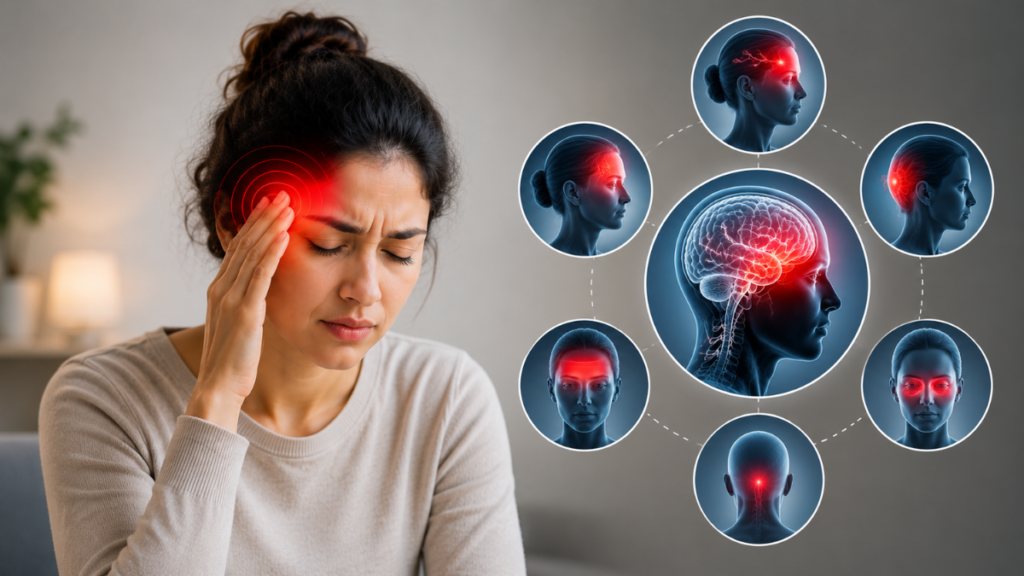

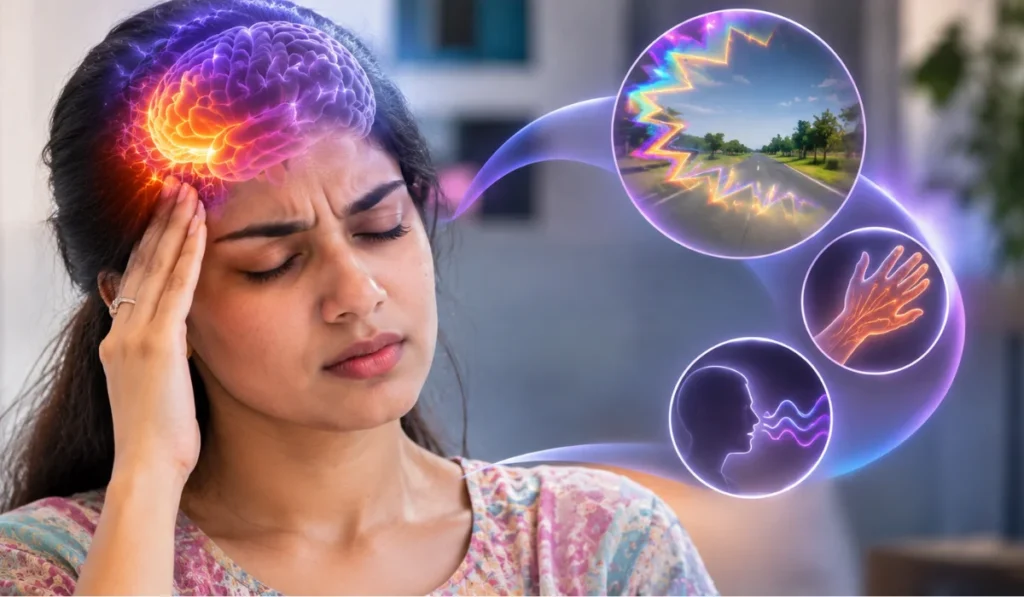
Migraine symptoms can include nausea, sensitivity to light and sound, dizziness, visual disturbances, tingling, and difficulty concentrating. These changes may occur before, during, or after a headache. Some people even experience migraine aura without significant head pain.
For example, you might notice flashing lights while reading, feel unusually tired, or become uncomfortable around everyday sounds before a headache begins.
The way migraine affects a person can differ considerably, with some experiencing intense head pain and others noticing changes in vision, balance, or sensitivity to their surroundings Understanding these patterns can help you recognise possible attacks, but similar symptoms may also have other medical causes.
Read More: EEG Test Explained: Why Is It Done, What Happens During the Test, and What Can It Detect?
9 Migraine Symptoms Beyond Headache
Migraine attacks may involve an early warning phase, temporary neurological symptoms called aura, headache, and a recovery period. Not everyone experiences every phase.
1. Nausea or Vomiting
Migraine can affect your digestive system, causing nausea, reduced appetite, or vomiting. These symptoms may become more noticeable as an attack progresses.
Repeated vomiting can make it difficult to drink fluids or take oral medication. Seek medical advice if you cannot maintain hydration.
2. Sensitivity to Light
Bright sunlight, mobile screens, or ordinary indoor lighting may become uncomfortable during migraine.
This symptom, called photophobia, can occur alongside headache or begin earlier. Some people find temporary relief by resting in a dimly lit environment.
3. Sensitivity to Sound
During an attack, traffic, television, or conversations may seem unusually loud or unpleasant.
During a migraine episode, ordinary sounds may become harder to tolerate. This condition, called phonophobia, can occur alongside discomfort from bright lighting and may interfere with studying, working, or other daily activities.
4. Discomfort Around Strong Smells
Perfumes, incense, cleaning products, and cooking odours may become difficult to tolerate.
Known as osmophobia, this sensitivity can develop during an attack. Some people also identify particular odours as possible migraine triggers.
5. Flashing Lights or Zigzag Patterns
Migraine aura may produce temporary visual changes, including shimmering lights, zigzag lines, or blind spots.
These disturbances typically develop gradually and may move across the visual field. Individual visual aura symptoms usually last 5-60 minutes.
Sudden vision loss, particularly in one eye, requires urgent assessment rather than an assumption of migraine.
6. Tingling or Numbness
Some people experience pins and needles that begin in the fingers and gradually spread towards the arm or face.
This may represent sensory migraine aura. The sensation usually resolves, although its duration and pattern can vary.
Sudden numbness or weakness, particularly on one side of the body, requires emergency evaluation.
7. Dizziness or Vertigo
Migraine can sometimes cause spinning sensations, motion sensitivity, or difficulty maintaining balance.
These symptoms may occur with vestibular migraine, even when headache is mild or absent.
However, dizziness can also result from inner-ear disorders and other medical conditions. The pattern and associated symptoms are important for diagnosis.
8. Difficulty Concentrating or Finding Words
During migraine, you may find it harder to focus, remember information, or follow conversations.
Some people describe this as mental fog. Temporary language disturbances can also occur during aura.
Sudden difficulty speaking or understanding speech is a possible stroke symptom and requires emergency care.
9. Unusual Fatigue, Yawning, or Neck Discomfort
Migraine may begin with subtle symptoms several hours before headache develops.
Possible early changes include:
- Repeated yawning despite adequate sleep.
- Unusual tiredness or reduced concentration.
- Neck discomfort or stiffness.
- Mood changes or food cravings.
These symptoms can occur during the prodrome phase. Fatigue may also continue after the headache improves.
Also Read: Early Signs of Autism in Toddlers: 10 Warning Signs Parents Should Know
What Is Migraine Aura, and Can It Occur Without Headache?
Migraine aura consists of temporary neurological symptoms, most commonly affecting vision, sensation, or language.
Typical aura develops gradually over at least five minutes. Individual symptoms usually last 5-60 minutes and are fully reversible. A migraine aura does not necessarily progress to head pain. In certain cases, the temporary visual or sensory changes resolve without a headache developing afterward.
However, not every visual disturbance or episode of numbness is migraine aura. Stroke, transient ischemic attack (TIA), and other conditions may cause similar symptoms.
A first episode, sudden onset, or a major change from your usual pattern needs medical assessment. Stroke-like symptoms require emergency care.
Are Migraine Symptoms Different in Females?
Migraine symptoms in females are generally similar to those in males, but hormonal changes can influence when attacks occur.
Some women experience migraines around menstruation. These attacks may be longer or more difficult to manage than those occurring at other times.
Migraine patterns can also change during pregnancy, after childbirth, or around menopause.
Recording headache dates alongside menstrual cycles can help identify patterns and guide treatment discussions. Medication choices during pregnancy require particular care.
You May Like: Developmental and Cognitive Delays in Children: Early Signs, Causes, Diagnosis & Treatment
माइग्रेन के लक्षण क्या हैं? (Migraine Symptoms in Hindi)
माइग्रेन में सिरदर्द के अलावा जी मिचलाना, उल्टी, तेज रोशनी या आवाज से परेशानी, चक्कर आना, आँखों के सामने चमकती रेखाएँ दिखना और ध्यान लगाने में कठिनाई जैसे लक्षण हो सकते हैं।
कुछ लोगों को सिरदर्द शुरू होने से पहले थकान, बार-बार जम्हाई आना या गर्दन में अकड़न महसूस होती है।
अचानक बोलने में परेशानी, शरीर के एक तरफ कमजोरी या अचानक दिखाई देना बंद होना आपातकालीन स्थिति का संकेत हो सकता है। ऐसे लक्षणों में तुरंत चिकित्सा सहायता लें।
When Are Migraine-Like Symptoms a Medical Emergency?
Migraine can resemble other neurological conditions. Recognising emergency warning signs is therefore essential.
Seek immediate emergency care for:
- A sudden, extremely severe headache reaching maximum intensity within seconds or minutes.
- New facial drooping, one-sided weakness, or sudden speech difficulty.
- Sudden vision loss or new double vision.
- Severe headache with fever, marked neck stiffness, or confusion.
- Headache accompanied by a new seizure or loss of consciousness.
A previous migraine diagnosis does not rule out another neurological emergency. Do not wait for stroke-like symptoms to disappear.
Read This: Why Do My Legs Feel Heavy While Walking? 7 Neurological Causes to Know
How Are Migraine Symptoms Diagnosed and Treated?
Migraine is diagnosed mainly through medical history and clinical examination. There is no single blood test or brain scan that confirms typical migraine.
A neurologist assesses headache frequency, duration, associated symptoms, medication use, and changes in the usual pattern.
MRI or CT imaging is not routinely required for typical migraine with a normal neurological examination. Investigations may be appropriate when warning signs or unusual findings suggest another cause.
Management may include:
- Acute treatment: Suitable medicines for headache and associated symptoms, including migraine-specific medicines when appropriate.
- Preventive treatment: Considered for frequent or disabling attacks.
- Lifestyle measures: Regular sleep, consistent meals, hydration, and management of identifiable triggers.
- Headache diary: Recording symptoms, attack frequency, medication use, and possible triggers.
Frequent use of certain headache medicines can contribute to medication-overuse headache.
For more detailed information about diagnosis and treatment options, read our migraine treatment in Patna service page.
If you want to understand potential triggers, our article on migraine causes, symptoms, triggers and care explains how sleep, stress, meals, and other factors may influence attacks.
When Should You Consult a Neurologist?
Consider neurological evaluation when migraine symptoms become frequent, change significantly, interfere with daily activities, or require headache medicines repeatedly.
Recurring visual disturbances, dizziness, or sensory changes also deserve assessment when the diagnosis is uncertain.
At Dr. Anwar Neuro Clinic in Kankarbagh, we evaluate headache patterns and associated neurological symptoms to guide appropriate clinical decisions.
If recurring symptoms are affecting your daily life, you can schedule an appointment with a senior neurologist in Patna for neurological assessment.
Related Article: Stroke Symptoms and Treatment: Warning Signs, Causes & Recovery
Final Takeaway
Migraine can affect vision, balance, digestion, concentration, and sensitivity to everyday surroundings, not just cause headache.
Recognising recurring patterns can help you communicate symptoms clearly and seek appropriate treatment. However, sudden or unfamiliar neurological symptoms should never automatically be attributed to migraine.
Medical References
- International Headache Society – ICHD-3: Migraine With Aura
- NICE Guideline CG150 – Headaches in Over 12s: Diagnosis and Management
Medical content prepared for Dr. Anwar Neuro Clinic. This article provides general health information and does not replace individual medical assessment.
Frequently Asked Questions About Migraine Symptoms
Can migraine occur without a headache?
Yes. Some people experience migraine aura without significant head pain. New visual or sensory symptoms still require appropriate evaluation to exclude other causes.
What are the earliest signs of migraine?
Early signs may include unusual tiredness, repeated yawning, neck discomfort, mood changes, and difficulty concentrating. These do not occur before every attack.
Can migraine cause blurred vision?
Migraine aura may produce temporary visual disturbances. Sudden vision loss or unfamiliar visual symptoms should not be assumed to be migraine.
How long do migraine symptoms last?
Untreated migraine headaches typically last 4-72 hours in adults. Individual aura symptoms generally last 5-60 minutes, while fatigue may continue after headache resolution.
Are migraines more common around menstruation?
Some women experience migraine attacks around menstruation because of hormonal fluctuations. Tracking headache and menstrual dates can help identify a possible relationship.
When should migraine symptoms be evaluated?
Seek medical evaluation when attacks are frequent, disabling, changing, or difficult to control. Sudden stroke-like symptoms require emergency care.