
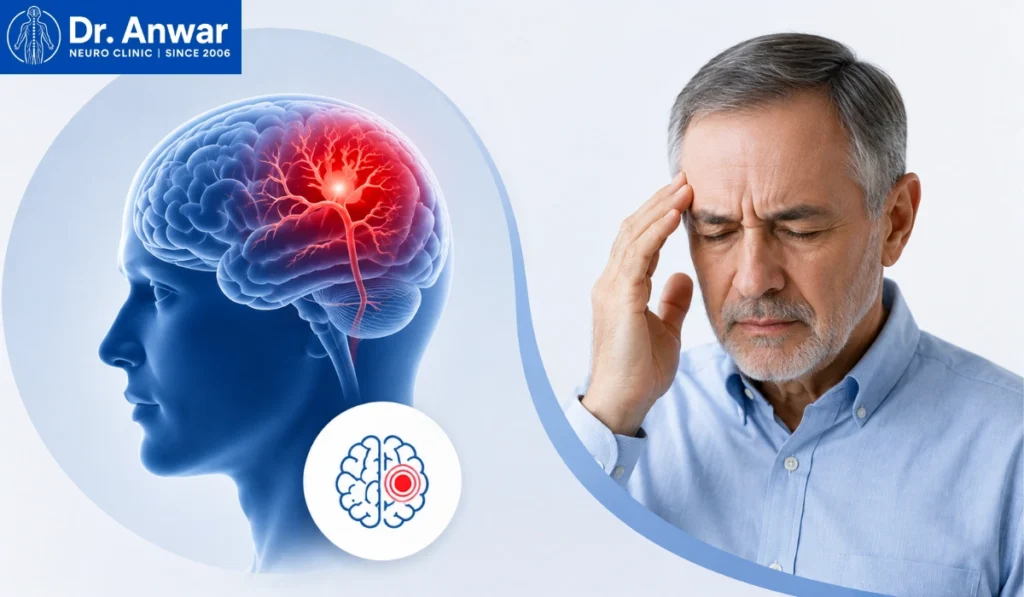
Stroke can happen suddenly, often without pain. A person may be speaking normally one moment and then struggle to form words, lose strength in one arm, develop an uneven smile, or suddenly become unsteady while walking.
Because these changes can be brief or appear mild at first, families sometimes wait to see whether the person improves. That delay can be risky. Stroke affects blood flow to the brain, and some treatments work best when started quickly.
As a neurologist, I advise patients and families to treat sudden neurological changes seriously. If stroke symptoms begin without warning, the first step is not to wait for a clinic appointment. The person should be taken for emergency medical evaluation as soon as possible.
What Happens During a Stroke?
Your brain depends on a steady flow of oxygenated blood to keep working normally. A stroke occurs when that supply is interrupted or when bleeding develops in or around the brain.
There are two main types of stroke.
An ischemic stroke happens when an artery supplying the brain becomes blocked, usually because of a clot. This is the more common type.
A hemorrhagic stroke occurs when a blood vessel ruptures and bleeding starts in or around brain tissue.
The distinction is important because the treatment for a blocked artery is very different from the treatment for bleeding. This is why urgent brain imaging, usually CT and sometimes MRI, is needed before doctors decide which treatment is appropriate.
Read More: Migraine Treatment: Causes, Symptoms, Triggers & Care
Stroke Symptoms: What Should You Look For?
Stroke symptoms usually begin suddenly. The exact signs depend on which part of the brain is affected.
A simple way to remember the common warning signs is B.E. F.A.S.T.:
- Balance: sudden trouble walking or loss of coordination
- Eyes: sudden vision loss, blurring, or double vision
- Face: one side of the face looks weak or the smile becomes uneven
- Arm: one arm suddenly feels weak or numb
- Speech: words become unclear or difficult to understand
- Time: seek emergency medical care immediately
Other possible signs can include sudden confusion, numbness on one side of the body, or a severe unusual headache.
Do not wait for several symptoms to appear together. Even one sudden neurological change can be enough to require urgent evaluation.
Early Signs of Stroke That People Often Miss
Stroke does not always begin with complete paralysis or loss of consciousness.
Sometimes the first clue is surprisingly small. Someone may suddenly start dropping objects from one hand. Another person may notice that their speech sounds strange for a few minutes. Some patients describe sudden blurred vision, unexpected imbalance, or tingling affecting one side.
The most important point is the sudden change from normal.
Early signs of stroke may include:
- Sudden weakness in one hand or leg
- New one-sided numbness
- A change in facial symmetry
- Brief trouble speaking
- Sudden vision disturbance
- Abrupt loss of balance
The symptom may look mild, but that does not mean it is safe to ignore.
What If Stroke Symptoms Disappear?
This is a common source of confusion.
Sometimes stroke-like symptoms improve within minutes or hours. This may happen during a transient ischemic attack, or TIA. A TIA is often called a “mini-stroke,” but the term can be misleading because the warning is still serious.
A person may suddenly develop weakness, speech difficulty, or facial asymmetry and then appear completely normal again.
That improvement should not be treated as reassurance.
A TIA can be a warning that the brain’s blood supply has been temporarily disturbed and that the risk of a future stroke may be higher. Emergency evaluation is still important.
Also Read: Brain Tumour or Stroke? 10 Small Neurological Warning Signs You Should Never Ignore
What Causes a Stroke?
The immediate problem in stroke is either blocked blood flow or bleeding, but there are often underlying risk factors that increase the chance of this happening.
High blood pressure can greatly increase the likelihood of developing a stroke. Over time, uncontrolled blood pressure can damage blood vessels throughout the body, including those supplying the brain.
Other important risk factors include:
- Diabetes
- High cholesterol
- Smoking
- Atrial fibrillation
- Previous stroke or TIA
- Physical inactivity
- Excess body weight
- Increasing age
- Family history of vascular disease
Some of these factors cannot be changed, but many can be managed with treatment and lifestyle changes.
That is why stroke care does not end once the patient leaves the hospital. Understanding why the stroke occurred is an important part of reducing the risk of another one.
How Is Stroke Diagnosed in the Hospital?
When a patient reaches the hospital, doctors need to answer several questions quickly.
They need to understand whether a stroke has happened, whether it is caused by a clot or bleeding, which part of the brain is affected, and when the symptoms began.
One of the most useful details a family member can provide is the time the patient was last known to be normal.
The hospital evaluation may include a neurological examination, CT or MRI brain imaging, blood tests, blood pressure and blood sugar checks, ECG, and blood-vessel imaging when needed.
A neurologist for stroke in Patna or an emergency stroke team uses all of this information together to decide the next step.
Stroke Treatment: Why the First Few Hours Matter
Once stroke symptoms begin, time becomes an important part of treatment.
If part of the brain is not receiving enough blood and oxygen, brain tissue can become damaged. Some emergency treatments are more effective when given within a limited time window.
However, not every stroke patient receives the same treatment. The plan depends on the stroke type, imaging findings, symptom timing, medical history, current medicines, and overall condition.
This is why stroke treatment in Patna should begin with urgent hospital assessment rather than home treatment or self-medication.
You May Like: What Should I Eat If I Have Epilepsy?
How Is Ischemic Stroke Treated?
In an ischemic stroke, the problem is a blocked artery.
For selected patients, doctors may consider intravenous clot-dissolving treatment if the timing, imaging, and medical history make it safe.
Some patients have a blockage in a large brain artery. In carefully selected cases, a procedure called mechanical thrombectomy may be used to remove the clot.
The most important thing for families is not to decide which treatment is required. The priority is to recognize the symptoms and reach the hospital quickly.
How Is Hemorrhagic Stroke Treated?
Hemorrhagic stroke needs a different approach because the problem is bleeding rather than blockage.
Treatment may focus on controlling blood pressure, limiting further bleeding, managing pressure inside the skull, and reversing certain blood-thinning medicines when appropriate.
Some patients may need neurosurgical or endovascular treatment depending on the location and severity of bleeding.
This is also why giving medicines at home without knowing the stroke type can be dangerous.
What Should You Not Do When a Stroke Is Suspected?
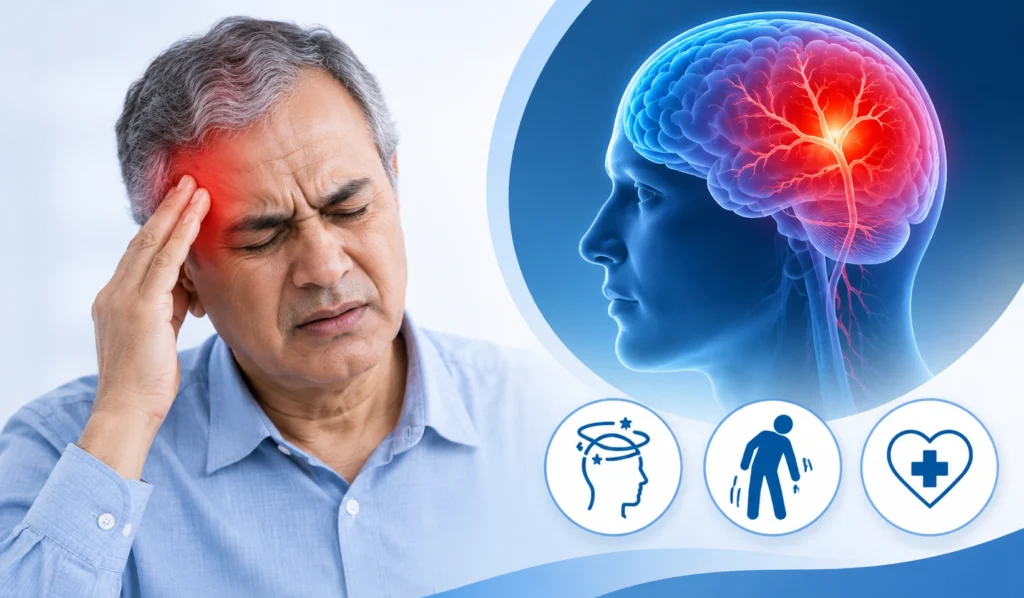
Families often want to help immediately, but some actions can cause delay or create new risks.
If stroke is suspected:
- Do not wait at home for symptoms to settle
- Do not let the person “sleep it off”
- Do not give food or water if swallowing may be affected
- Do not start medicines on your own
- Note when the symptoms began
- Arrange emergency medical care quickly
Even if the symptoms improve during travel, the patient should still be evaluated.
Read This: Is It Normal Aging or Dementia? Early Warning Signs, Treatment Options and Why Delaying Care Matters
What Happens After the Emergency?
Once the immediate danger is controlled, the focus shifts toward recovery and prevention.
Stroke can affect many different abilities depending on which part of the brain has been injured.
A patient may have difficulty with walking, arm movement, speech, swallowing, vision, memory, concentration, balance, or emotional control.
Two people with similar-looking strokes may therefore need very different rehabilitation plans.
Stroke Rehabilitation and Recovery
Recovery after stroke is rarely about one exercise or one therapy. It usually involves several areas of care.
Physiotherapy may help improve strength, walking, balance, and mobility. Occupational therapy can help patients relearn everyday activities such as dressing, eating, writing, or using household items.
Speech and language therapy may be needed when communication or swallowing has been affected.
Rehabilitation may include:
- Physiotherapy
- Occupational therapy
- Speech and swallowing therapy
- Cognitive rehabilitation
- Balance training
- Family and caregiver support
The goal is to help the patient regain as much independence as possible.
Related Article: Is It Just Tingling or Nerve Damage? 5 Symptoms Neurologists Say You Should Never Ignore
How Long Does Stroke Recovery Take?
There is no fixed recovery timeline.
Some patients improve quickly during the first few weeks. Others continue to make progress over several months or longer.
Recovery depends on several factors, including the location and severity of the stroke, how much brain tissue was affected, how quickly treatment was received, age, overall health, and participation in rehabilitation.
Walking may improve faster than hand movement in one patient, while another may regain movement before speech becomes clearer.
It is better to compare the patient with their own previous ability rather than with someone else who has also had a stroke.
Can Someone Fully Recover From a Stroke?
Some patients regain a high level of independence, while others continue to have weakness, speech difficulties, memory problems, or other limitations.
Complete recovery cannot be guaranteed in advance.
Recovery is also not simply “all or nothing.” A person may still have mild weakness but return to independent walking. Another patient may continue to have some speech difficulty but improve enough to communicate confidently with family.
The aim of rehabilitation is meaningful improvement in everyday life.
Read More: Why Do Seizures Happen? Common Causes, Warning Signs, and Treatment Options
How Can You Lower the Chances of Having Another Stroke?
After a stroke, preventing another event becomes a major part of care.
The exact prevention plan depends on why the first stroke happened, but long-term care may include controlling blood pressure, diabetes, cholesterol, and heart rhythm problems.
Helpful measures include:
- Take prescribed medicines regularly
- Control blood pressure
- Manage diabetes and cholesterol
- Stop smoking
- Stay physically active as medically advised
- Follow a balanced diet
- Manage atrial fibrillation or other heart conditions
- Keep follow-up appointments
Lifestyle changes support treatment, but they should not replace medicines that have been prescribed for stroke prevention.
When Should You See a Neurologist After Stroke?
Neurological follow-up is useful after the patient is medically stable.
A neurologist can review recovery, persistent symptoms, medicine use, stroke risk factors, and the need for additional rehabilitation or testing.
A stroke doctor in Patna may also coordinate care with physiotherapy, speech therapy, cardiology, and other specialists depending on the patient’s needs.
If a stroke survivor suddenly develops new weakness, speech difficulty, vision loss, or balance problems, do not wait for a follow-up appointment. Seek emergency care again.
You May Like: Migraine or Normal Headache? How to Understand the Difference
Book a Stroke Consultation
If you or a family member is recovering from stroke, has persistent neurological symptoms, or needs follow-up for stroke prevention and rehabilitation planning, a detailed neurological evaluation can help guide the next stage of care.
Patients looking for experienced neurologist doctors in Patna can consult Dr. Anwar Alam for stroke follow-up, neurological assessment, recovery monitoring, and an individualized management plan based on the type of stroke and current health needs.
Conclusion
Stroke is a medical emergency, but recovery does not end with emergency treatment.
The first priority is recognizing stroke symptoms quickly and reaching the hospital without delay. After that, the focus shifts toward rehabilitation, recovery, and preventing another stroke.
For patients and families, the most practical approach is simple: recognize sudden neurological changes, act quickly, understand the cause of the stroke, follow the treatment plan, and stay consistent with rehabilitation and follow-up care.
Frequently Asked Questions
What are the earliest signs that may indicate a stroke?
Early signs of stroke often appear suddenly and may include facial weakness, numbness or weakness on one side, speech difficulty, vision changes, or sudden loss of balance.
Can stroke symptoms disappear on their own?
Yes. Stroke-like symptoms may temporarily improve during a TIA. This does not make the episode harmless, and urgent medical evaluation is still needed.
Can a person recover completely after stroke?
Some patients regain most of their previous abilities, while others continue to have difficulties. Recovery depends on stroke severity, location, overall health, treatment, and rehabilitation.
What treatment is given immediately after stroke?
Treatment depends on whether the stroke is caused by a blocked artery or bleeding. Selected ischemic stroke patients may be eligible for clot-dissolving medicine or thrombectomy, while hemorrhagic stroke requires different treatment.
How long does stroke recovery take?
Recovery can continue for weeks, months, or longer. Different abilities may improve at different speeds.
Can another stroke be prevented?
The risk can often be reduced by controlling blood pressure, diabetes and cholesterol, treating heart conditions, stopping smoking, taking prescribed medicines, and attending regular follow-up.