

Parasomnias Treatment in Patna, Bihar

Parasomnias Specialist in Patna, Bihar
Dr. Anwar Alam, MBBS, MD (General Medicine), DM (Neurology)
Dr. Anwar Alam has 20 years of clinical experience in neurology and evaluates patients with unusual nighttime behaviours, sleep-related movements, sleep disturbances, and other neurological concerns. Patients have visited him from Patna, Sitamarhi, Muzaffarpur, Gaya, Ara, Chhapra, Begusarai, Hajipur, Supaul, Mokama, other cities and villages across Bihar, and areas near the Nepal border.
On Google, Dr. Anwar Alam has a 4.7-star rating based on 940+ patient reviews, reflecting feedback shared by patients and families who have consulted him for neurological care. His assessment focuses on understanding the nature of each nighttime episode, including when it occurs, what the person does during the event, their level of awareness, what happens after waking, and any associated neurological symptoms.
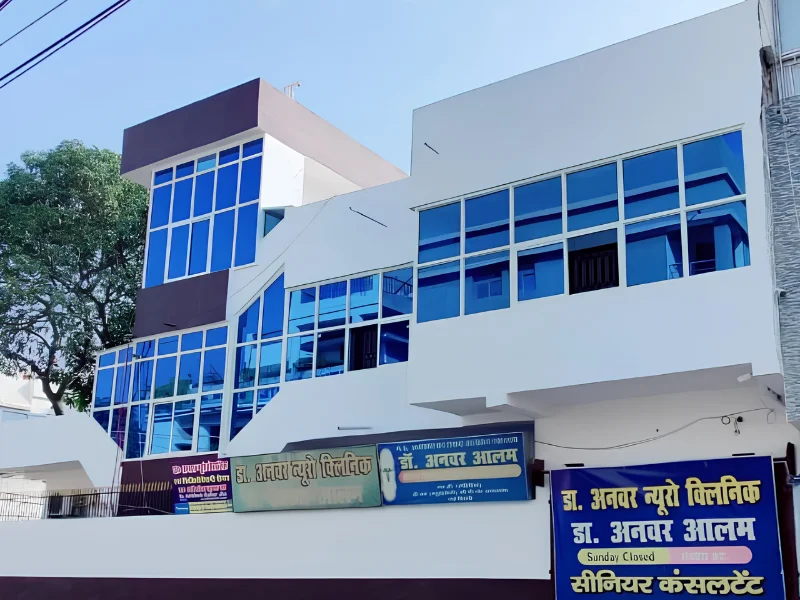
At Dr Anwar Neuro Clinic, Kankarbagh, Patna, patients with suspected parasomnias are evaluated according to their individual symptoms and medical history. When necessary, the assessment may help determine whether further evaluation is needed to distinguish parasomnias from conditions such as nocturnal seizures or other sleep-related disorders.
Common Symptoms of ParasomniasUnderstanding Parasomnias
Parasomnias involve unusual behaviours, movements, sensations, or experiences occurring during sleep or while transitioning between sleep and wakefulness. A person may walk around, speak, sit up suddenly, appear frightened, or perform an activity without being completely conscious of it.
The nature of a parasomnia can differ considerably from one person to another. Some episodes occur during particular stages of sleep, while others may be associated with disrupted sleep or an irregular sleep schedule. The person may show limited awareness during the episode and can be difficult to fully wake at that time.
An important part of evaluation is making sure that the event is not actually caused by another condition. For example, nocturnal seizures can sometimes produce repetitive movements or unusual behaviour, while sleep apnea may cause abrupt awakenings, gasping, or abnormal movements. The pattern and circumstances of the episode may help in understanding what is happening.
The way these symptoms appear can vary based on the specific parasomnia and when the event happens during sleep.
1. Sleepwalking
A person may get out of bed and walk around while remaining only partly aware of their surroundings.
2. Talking During Sleep
Speech, sounds, or conversations may occur while the person remains asleep.
3. Sudden Crying or Screaming
Some episodes involve an abrupt emotional reaction, such as shouting, crying, or appearing frightened.
4. Sitting Up or Moving Suddenly
The person may sit upright, move their arms or legs, or perform other unexpected actions during sleep.
5. Confused Behaviour
Once the event ends, the person may remain confused briefly and need a little time before becoming completely aware of their surroundings.
6. Limited Recall
Many people do not clearly remember what happened after waking.
7. Repetitive Nighttime Actions
Some parasomnias can cause a person to make recurring movements or carry out unusual actions while remaining unaware of them.
8. Sleep Disturbance
Frequent episodes can interrupt normal sleep and may contribute to morning tiredness or daytime sleepiness.
Note: Nighttime episodes involving injury, prolonged confusion, repeated stiffening or jerking, tongue biting, loss of bladder control, or a first unexplained event should receive medical attention because other neurological conditions may produce similar symptoms.
Testimonials & Reviews
What Our Patients Say
Trustindex verifies that the original source of the review is Google. Good doctor and best treatmentPosted on GoogleTrustindex verifies that the original source of the review is Google. वैरी गुड डॉ साहब सर जी हैPosted on GoogleTrustindex verifies that the original source of the review is Google. बहुत-बहुत धन्यवाद सर आपको आपके कारण काफी संतोषजनक महसूस कर रहा हूंPosted on GoogleTrustindex verifies that the original source of the review is Google. Happy to share after 1st visit I'm cured , all staffs are helpful in nature. And I'm fully satisfiedPosted on GoogleTrustindex verifies that the original source of the review is Google. Best doctor in patna ,K 2 P C colony Malahipakari chowk.Posted on GoogleTrustindex verifies that the original source of the review is Google. Sir Paisent satisfactionPosted on GoogleTrustindex verifies that the original source of the review is Google. Dr Anwar Alam sir is a good doctor. I am satisfied with you . His treatment is very good. ThanksPosted on GoogleTrustindex verifies that the original source of the review is Google. I recently met Dr. Anwar Alam in Patna, and I would like to share my positive experience. For the past 6 months, my mother has been under his care, and we are very satisfied with the treatment provided. Her condition has improved significantly, and she is now feeling much more relaxed and comfortable. Dr. Anwar Alam is not only highly skilled but also very cooperative and understanding. He listens patiently and treats his patients with great care and respect. His approach makes us feel like we are consulting a trusted family doctor. We are truly impressed with his treatment and overall behavior. I highly recommend him to anyone seeking quality medical carePosted on GoogleTrustindex verifies that the original source of the review is Google. Dr Anwar Alam is a good doctor in patna. His treatment is very good.I am satisfied with you.All staffs behaviour is very good .Thank you .Posted on GoogleTrustindex verifies that the original source of the review is Google. Best Doctor of neurologist in patna Dr Anwar Alam mai bhut parshan tha apni beti ko leker Dr Anwar Alam ke treatment se hamari beti bikul thik ho gayi.thans Doctor sb.
Parasomnias: Causes and Risk Factors
There is no single explanation for every parasomnia. Sleep patterns, health conditions, medicines, and individual susceptibility can all influence nighttime events.
1. Inadequate Sleep
Regularly getting less sleep than needed can make certain parasomnia episodes more likely.
2. Irregular Sleep Routine
Frequent changes in bedtime or waking time can disturb normal sleep patterns.
3. Psychological Stress
Periods of increased stress may interfere with sleep and can contribute to some nighttime behaviours.
4. Fever or Physical Illness
Temporary illness and disrupted sleep may sometimes be associated with unusual nighttime events.
5. Sleep Apnea
Repeated interruptions in breathing can fragment sleep and may occur alongside certain parasomnias.
6. Certain Medicines
Some medications can influence sleep patterns or nighttime behaviour in susceptible individuals.
7. Alcohol or Other Substances
Alcohol and some substances can alter normal sleep architecture and may aggravate sleep-related behaviours.
8. Family Tendency
A family history of certain parasomnias may indicate that genetic or familial factors play a role in some individuals.
9. Neurological Conditions
Certain neurological disorders, including nocturnal seizure disorders, can resemble parasomnias or occur alongside them.
These factors may provide clues but do not establish the diagnosis. The actual event needs to be assessed in its clinical context.
How Dr. Anwar Alam Evaluates Parasomnias
The assessment focuses on understanding the patient’s experience surrounding the nighttime event, including how it starts, what occurs during it, and how the person behaves afterwards. Since the person experiencing the event may not remember it, information from a parent, spouse, or another observer can be particularly helpful.
Dr. Anwar Alam may consider when the episode usually occurs, how often it happens, what movements or behaviours are seen, whether the person responds when spoken to, and whether they remember anything afterwards. Associated symptoms such as snoring, choking, breathing pauses, unusual jerking, stiffening, daytime sleepiness, or confusion may also be relevant.
Previous neurological problems, medicines, sleep habits, recent illness, and changes in sleep routine may be reviewed. If a family member has safely recorded an episode, the video may also help the doctor understand the nature of the event.
The assessment may include:
— Detailed history of the nighttime episode
— Information from someone who witnessed the event
— Review of sleeping and waking patterns
— Neurological examination
— Review of medicines and relevant medical history
— Assessment for features that could suggest seizures or another sleep disorder
The objective is to understand whether the event is consistent with a parasomnia or whether another condition requires investigation.
Diagnostic Tests That May Be Recommended
Testing is not required for every person with occasional unusual sleep behaviour. Investigations are considered according to the patient’s symptoms and clinical findings.
Sleep Study
An overnight sleep study may be useful when the doctor needs to assess sleep stages, breathing, limb movements, or other changes occurring during sleep.
Video Sleep Monitoring
Video recording during sleep can help correlate visible behaviours or movements with physiological changes recorded during the study.
EEG
An EEG may be recommended when the episode has features that raise concern about abnormal electrical activity or nocturnal seizures.
MRI Brain
Brain imaging may be considered when the patient’s history or neurological examination suggests that a structural brain problem needs to be investigated.
Review of Existing Reports
Previous EEGs, MRI reports, prescriptions, sleep records, or videos of episodes can provide additional information during evaluation.
Parasomnias Treatment in Patna
Treatment depends on the type of parasomnia, how often the episodes occur, their impact on sleep, and whether another condition is contributing to them.
Management may include:
— Establishing a consistent sleep and wake schedule
— Correcting inadequate sleep where relevant
— Identifying circumstances that appear to trigger episodes
— Reviewing medicines that may be influencing nighttime behaviour
— Treating an associated sleep disorder when identified
— Using prescribed medication in selected cases
— Managing an underlying neurological condition when it is responsible for the episodes
— Taking practical safety precautions when sleepwalking or other behaviours create an injury risk
Not every parasomnia requires medication. The appropriate approach depends on the patient’s specific presentation.
What Patients Can Expect From Ongoing Care
The frequency and nature of parasomnia episodes can change over time. Follow-up may be useful if episodes recur, interfere with sleep, or occur alongside other neurological symptoms.
Families can maintain a simple record of nighttime events, noting approximately when an episode occurred, what was observed, how long it appeared to last, and how the person behaved after waking. This information can make follow-up assessment more useful.
If the episodes become more frequent, change in appearance, cause injury, or develop alongside symptoms such as daytime seizures, prolonged confusion, or unusual neurological changes, further evaluation may be required.
When Should Parasomnias Be Evaluated?
Medical evaluation is particularly important when nighttime episodes:
— Begin unexpectedly during adulthood
— Occur frequently or become progressively more disruptive
— Result in falls or other injuries
— Include repeated jerking or stiffening
— Are followed by prolonged confusion
— Occur with tongue biting or loss of bladder control
— Are accompanied by other neurological symptoms
These features can sometimes indicate a condition that requires a different type of treatment.
Why Choose Dr. Anwar Neuro Clinic for Parasomnias Treatment in Patna?
Unusual behaviour during sleep can have more than one possible explanation. At Dr Anwar Neuro Clinic, the focus is on understanding the patient’s specific nighttime symptoms and considering relevant neurological and sleep-related causes before deciding whether further testing or treatment is appropriate.
Patients seeking Parasomnias Treatment in Patna can benefit from:
— Consultation with Dr. Anwar Alam, MBBS, MD (General Medicine), DM (Neurology), with 20 years of clinical experience
— Evaluation of sleepwalking, sleep talking, unusual movements, nighttime confusion, and other sleep-related episodes
— Detailed neurological assessment
— Review of previous medical reports and current medicines
— Assessment for conditions that may resemble parasomnias, including nocturnal seizures
— Guidance regarding sleep studies, EEG, or other investigations when clinically appropriate
— Management planning according to the patient’s individual presentation
— Convenient Kankarbagh location with parking available for cars and two-wheelers
Why Choose Dr. Anwar Neuro Clinic for Migraine Treatment in Patna?
When headaches keep returning despite trying different medicines, many patients feel unsure about what to do next or which doctor to consult. At Dr. Anwar Neuro Clinic, the approach is built around listening to the patient’s actual experience, explaining the likely cause in simple language, and arriving at a plan that fits the individual rather than a generic template.
Patients also value the practical, comfortable experience Dr. Anwar Neuro Clinic offers in Kankarbagh, Patna, Bihar:
— Clear, unhurried explanation of the diagnosis and next steps
— Affordable and quality neurology consultation
— Adult and child neurology care under one roof
— Discounted medicines for patients undergoing treatment
— A clean, comfortable clinic environment with trained staff
— VIP lounge for a more comfortable waiting experience
— Convenient Kankarbagh location with car and bike parking
— In-house diagnostic facilities that reduce the need to travel between centres
1. Intention
The goal is simple: understand the nature of unusual nighttime episodes, identify whether they may represent parasomnias or another neurological or sleep-related condition, and help the patient move toward appropriate evaluation and care.
2. 20 Years of Experience & 90% Success Rate
Dr. Anwar Alam brings 20 years of clinical experience in neurology to the assessment of sleep-related neurological symptoms, abnormal nighttime movements, seizures, movement disorders, and other neurological concerns.
He also serves as Professor & Head, Neurology, NMCH Patna, Bihar.
3. 4.7-Star Rating Across 939+ Google Reviews
As one of the experienced neurologists in Patna for headache and migraine care, he brings this same depth of experience to every consultation.
Patients Visit From Across Patna and Bihar
Patients seeking neurological consultation for parasomnias, unusual nighttime behaviour, sleep-related movements, suspected nocturnal seizures, and other neurological concerns visit Dr Anwar Neuro Clinic from different areas of Patna and across Bihar, including Hanuman Nagar, Gardanibagh, Pahari, Kadamkuan, Rajendra Nagar, Boring Road, Sri Krishna Puri (SK Puri), Patliputra Colony, Bailey Road, Raja Bazar, Ashiana-Digha, Phulwari Sharif, Gandhi Maidan, Ashok Rajpath, Rajeev Nagar, Kurji, Gola Road, Mithapur, Jai Prakash Nagar, Lohia Nagar, Sampatchak, Parsa, Ranipur, Anisabad, Beur, Khagaul, Danapur, Sipara, Bihta, Hajipur, Sonepur, and neighbouring areas. Patients from these locations visit the clinic’s single Kankarbagh location for consultation; there are no other branch clinics.
Dr. Anwar Neuro Clinic Address: K2, P.C. Colony, Lane opposite Metro Pillar SP-8/P6, Malahi Pakri Chowk, Kankarbagh, Patna, Bihar 800020
FAQs About Parasomnias Treatment in Patna
Parasomnias are unusual behaviours, movements, or experiences that happen while a person is asleep or during the transition between sleeping and waking. Sleepwalking, sleep talking, confused awakenings, and certain nighttime behaviours may fall into this category. Similar events can also occur with other sleep or neurological conditions, so recurrent unexplained episodes may require evaluation.
Many parasomnias can be managed, although the appropriate approach varies according to the type of episode and what is contributing to it. Improving sleep habits, addressing triggers, managing associated sleep disorders, reviewing medicines, using safety measures, and prescribing treatment in selected cases may all have a role.
Yes, long-term painkiller use can sometimes lead to a rebound or medication-overuse headache, which needs a different management approach. A neurological evaluation can help identify whether this is happening and guide a safer, more effective long-term plan.
Parasomnias may be influenced by insufficient sleep, irregular sleeping schedules, stress, illness, certain medicines, alcohol, other sleep disorders, family tendency, or neurological conditions. The factors involved can differ according to the type of parasomnia and the individual patient.
Diagnosis usually begins with a detailed history of the nighttime event, including its timing, appearance, duration, level of awareness, and behaviour afterward. Information from someone who witnessed the episode can be especially useful. Depending on the presentation, a sleep study, video monitoring, EEG, or other investigation may be considered.
Some parasomnias and nocturnal seizures can appear quite similar. Repeated stereotyped movements, sudden stiffening or jerking, injuries, tongue biting, prolonged confusion, or other neurological features may prompt further investigation. When the nature of an episode is uncertain, sleep monitoring or EEG-based assessment may help clarify the diagnosis.