
Neuro-Ophthalmology Treatment in Patna

Neuropathy Specialist in Patna, Bihar
Dr. Anwar Alam, MBBS, MD (General Medicine), DM (Neurology)
Dr. Anwar Alam has **20 years of clinical experience in neurology** and evaluates patients with neurological conditions that may affect vision, eye movements, optic nerve function, or the visual pathways.
People from Patna and various districts and towns across Bihar, including Sitamarhi, Muzaffarpur, Gaya, Ara, Chhapra, Begusarai, Hajipur, Supaul, and Mokama, as well as areas close to the Nepal border, visit the clinic for neurological consultation.
Dr. Anwar Alam has a **4.7-star Google rating based on 940+ patient reviews**, reflecting feedback shared by patients and families who have consulted him for neurological care.
His clinical assessment focuses on understanding the patient’s visual complaints alongside relevant neurological symptoms and examination findings. After assessing the patient’s symptoms and clinical findings, Dr. Anwar Alam decides whether additional diagnostic tests, continued neurological management, or consultation with another specialist may be appropriate.
Understanding Neuro-Ophthalmology
Neuro-ophthalmology deals with vision-related problems that involve the nervous system rather than the eye alone. The optic nerves carry visual information from the eyes toward the brain, so a problem along this pathway can affect how clearly a person sees, distinguishes colours, or perceives part of their visual field.
One important condition evaluated in this area is optic neuritis, where inflammation affects the optic nerve. It can lead to reduced vision, changes in colour perception, and pain around or behind the eye, particularly when the eye moves. Optic neuritis can be associated with inflammatory or demyelinating neurological conditions, although not every case has the same underlying cause.
Other optic nerve problems can have a different pattern. For example, an optic nerve circulation problem may cause sudden vision loss that is typically painless. This is why sudden or unexplained visual loss should not be assumed to be ordinary eye strain.
Common Symptoms of Neuro-Ophthalmic Disorders
The symptoms depend on which part of the visual or neurological pathway is affected. Common concerns include:
1. Reduced Vision
Vision may become blurred, dim, or noticeably weaker in one or both eyes.
2. Pain With Eye Movement
Optic neuritis can cause pain around or behind the eye that becomes more noticeable when the eye moves.
3. Changes in Colour Vision
Colours may appear less bright or different from how they normally look.
4. Missing Areas of Vision
A person may notice a blind spot or difficulty seeing part of their normal visual field.
5. Double Vision
Problems involving the nerves that control eye movement can result in seeing two images.
6. Flashing or Flickering Visual Sensations
Some patients may notice flashes of light or unusual visual sensations alongside other symptoms.
7. Sudden Vision Loss
An abrupt reduction in vision requires prompt assessment, particularly when it occurs without an obvious eye-related explanation.
8. Headache With Visual Symptoms
Headache accompanied by visual changes may sometimes require neurological evaluation, particularly when the symptoms are new or persistent.
Note: Visual symptoms can arise from many eye and neurological conditions. Sudden vision loss, a new visual field defect, or rapidly worsening vision should be assessed promptly.
Testimonials & Reviews
What Our Patients Say
Trustindex verifies that the original source of the review is Google. Good doctor and best treatmentPosted on GoogleTrustindex verifies that the original source of the review is Google. वैरी गुड डॉ साहब सर जी हैPosted on GoogleTrustindex verifies that the original source of the review is Google. बहुत-बहुत धन्यवाद सर आपको आपके कारण काफी संतोषजनक महसूस कर रहा हूंPosted on GoogleTrustindex verifies that the original source of the review is Google. Happy to share after 1st visit I'm cured , all staffs are helpful in nature. And I'm fully satisfiedPosted on GoogleTrustindex verifies that the original source of the review is Google. Best doctor in patna ,K 2 P C colony Malahipakari chowk.Posted on GoogleTrustindex verifies that the original source of the review is Google. Sir Paisent satisfactionPosted on GoogleTrustindex verifies that the original source of the review is Google. Dr Anwar Alam sir is a good doctor. I am satisfied with you . His treatment is very good. ThanksPosted on GoogleTrustindex verifies that the original source of the review is Google. I recently met Dr. Anwar Alam in Patna, and I would like to share my positive experience. For the past 6 months, my mother has been under his care, and we are very satisfied with the treatment provided. Her condition has improved significantly, and she is now feeling much more relaxed and comfortable. Dr. Anwar Alam is not only highly skilled but also very cooperative and understanding. He listens patiently and treats his patients with great care and respect. His approach makes us feel like we are consulting a trusted family doctor. We are truly impressed with his treatment and overall behavior. I highly recommend him to anyone seeking quality medical carePosted on GoogleTrustindex verifies that the original source of the review is Google. Dr Anwar Alam is a good doctor in patna. His treatment is very good.I am satisfied with you.All staffs behaviour is very good .Thank you .Posted on GoogleTrustindex verifies that the original source of the review is Google. Best Doctor of neurologist in patna Dr Anwar Alam mai bhut parshan tha apni beti ko leker Dr Anwar Alam ke treatment se hamari beti bikul thik ho gayi.thans Doctor sb.
Neuro-Ophthalmology: Causes and Risk Factors
Vision and optic nerve problems can arise from inflammation, impaired blood supply, pressure around the brain, demyelinating disease, compression, autoimmune conditions, or other neurological causes.
1. Optic Neuritis :Inflammation affecting the optic nerve can produce reduced vision, colour changes, and eye-movement-related pain.
2. Multiple Sclerosis : Optic neuritis can sometimes occur as part of multiple sclerosis or another demyelinating neurological disorder.
3. MOG-Associated Disease : MOG antibody-associated disease can affect the optic nerves and may produce optic neuritis.
4. Neuromyelitis Optica Spectrum Disorder: NMOSD can involve the optic nerves and may cause significant visual impairment.
5. Reduced Blood Supply to the Optic Nerve : Ischemic optic neuropathy occurs when blood flow to the optic nerve is disrupted and can cause sudden visual loss.
6. Raised Intracranial Pressure : Increased pressure inside the skull can cause swelling of the optic discs, known as papilledema, and may be associated with headache or visual disturbances.
7. Autoimmune or Inflammatory Conditions : Certain systemic immune disorders can affect the optic nerve or other structures involved in vision.
8. Compression of the Optic Pathway : A growth or structural abnormality pressing on the optic nerve or visual pathway can interfere with vision.
9. Infectious or Other Neurological Conditions : In selected cases, infections, nutritional problems, toxins, or other neurological disorders can contribute to optic nerve dysfunction.
How Dr. Anwar Alam Evaluates Neuro-Ophthalmic Problems
The evaluation begins with understanding exactly what has changed in the patient’s vision. Dr. Anwar Alam may ask whether the problem appeared suddenly or gradually, whether one or both eyes are affected, whether colours look different, and whether eye movement causes pain.
He also considers associated neurological symptoms such as headache, weakness, numbness, balance problems, speech changes, or previous neurological episodes. Previous eye examinations, MRI reports, prescriptions, and other medical records can provide useful information.
The neurological assessment may include:
— Visual function and colour perception
— Eye movements and pupil responses
— Visual field assessment
— Coordination and neurological function
— Examination for associated neurological signs
The purpose is to determine whether the symptoms may be related to the optic nerve or another part of the nervous system and whether additional investigation is required.
Diagnostic Tests That May Be Recommended
The investigations depend on the suspected condition and clinical findings. Not every patient needs every test.
Visual Field Assessment Test
A formal visual field assessment can identify areas of reduced or missing peripheral or central vision that may not be obvious during everyday activities.
MRI of the Brain and Orbits
MRI may be recommended when optic neuritis, demyelinating disease, compression, or another neurological cause is suspected. Imaging can provide information about the optic nerve and relevant brain structures.
Optical Coherence Tomography
OCT can help assess the retinal nerve fibre layer and document structural changes associated with optic nerve disorders.
Blood Tests
Depending on the presentation, blood testing may be considered for autoimmune, inflammatory, infectious, or other conditions that could affect the optic nerve.
Neuro-Ophthalmology Treatment in Patna
Treatment depends on what is causing the visual or optic nerve problem. Optic nerve inflammation treatment is not necessarily the same as treatment for an optic nerve circulation problem, raised intracranial pressure, or a demyelinating condition.
Depending on the diagnosis, management may involve:
— Treatment for optic neuritis: Selected patients may require corticosteroid treatment, particularly when faster visual recovery is considered important.
— Treatment of the underlying neurological disease: If optic nerve inflammation is linked to conditions such as MS, NMOSD, or MOG-associated disease, the broader neurological condition may require specific management.
— Management of raised intracranial pressure: When increased pressure is responsible for optic nerve swelling, treatment focuses on identifying and addressing the underlying cause.
— Management of vascular optic nerve problems: Sudden painless vision loss may require assessment for vascular and systemic risk factors.
— Ongoing monitoring: Visual function, symptoms, examination findings, and imaging may be followed over time when appropriate.
Treatment should be selected after establishing the likely cause rather than treating every case of visual loss in the same way.
What Patients Can Expect From Ongoing Care
Some optic nerve and neurological visual disorders improve over time, while others require longer-term monitoring. Follow-up may involve checking vision, colour perception, visual fields, eye movements, neurological symptoms, and relevant test results.
Patients with recurrent optic neuritis or an identified neurological disease may require continued neurological care to monitor future episodes and manage the underlying condition.
Why Timely Evaluation Matters
A new change in vision should not automatically be attributed to glasses, eye strain, or tiredness. The timing and nature of the visual problem can provide important clues about whether the optic nerve or another neurological structure may be involved.
Prompt assessment is particularly important for sudden vision loss, rapidly worsening vision, a new visual field defect, severe headache with visual symptoms, or visual changes accompanied by other neurological problems.
Why Choose Dr. Anwar Neuro Clinic for Neuro-Ophthalmology Treatment in Patna?
Visual symptoms can sometimes be difficult to explain because the problem may involve the optic nerve or nervous system rather than the eye itself. At Dr Anwar Neuro Clinic, the focus is on understanding the patient’s visual complaint alongside the neurological findings before deciding on further evaluation.
Patients seeking optic neuritis treatment in Patna can benefit from:
— Evaluation by Dr. Anwar Alam, MBBS, MD (General Medicine), DM (Neurology) with 20 years of clinical experience
— Assessment of diabetic neuropathy, GBS, CIDP, peripheral nerve disorders, and nerve pain
— Detailed neurological examination of strength, sensation, reflexes, coordination, and gait
— Review of previous EMG, NCS, blood tests, scans, and medical reports
— Guidance regarding appropriate neurological investigations
— Individualised treatment planning according to the underlying condition
— Follow-up for persistent, progressive, or changing nerve symptoms
— Conveniently located in Kankarbagh with parking available for cars and two-wheelers
1. Intention
The goal is simple: understand the reason behind unexplained visual or optic nerve symptoms, identify when neurological investigation is necessary, and guide patients toward appropriate care. The focus is on assessing the patient’s individual symptoms and helping them understand the next appropriate step.
2. 20 Years of Experience & 90% Success Rate
Dr. Anwar Alam has 20 years of clinical experience in neurology and evaluates patients with neurological conditions that may affect vision, optic nerve function, eye movements, and visual pathways. His assessment takes into account the patient’s symptoms, medical history, examination findings, and available reports.
3. 4.7-Star Rating Across 939+ Google Reviews
Dr. Anwar Alam has a 4.7-star Google rating based on 940+ patient reviews, reflecting feedback shared by patients and families who have consulted him for neurological care. The reviews represent experiences from patients seeking evaluation and management for different neurological concerns. This feedback provides an additional reference for patients considering neurological consultation in Patna.
Patients Visit From Across Patna and Bihar
Patients visit Dr Anwar Neuro Clinic for neuropathy, nerve pain, numbness, diabetic neuropathy, GBS, CIDP, weakness, and other neurological concerns from different parts of Patna and across Bihar, including Hanuman Nagar, Gardanibagh, Pahari, Kadamkuan, Rajendra Nagar, Boring Road, Sri Krishna Puri (SK Puri), Patliputra Colony, Bailey Road, Raja Bazar, Ashiana-Digha, Phulwari Sharif, Gandhi Maidan, Ashok Rajpath, Rajeev Nagar, Kurji, Gola Road, Mithapur, Jai Prakash Nagar, Lohia Nagar, Sampatchak, Parsa, Ranipur, Anisabad, Beur, Khagaul, Danapur, Sipara, Bihta, Hajipur, Sonepur, and neighbouring areas. Patients from these localities travel to the clinic’s single Kankarbagh location for consultation; there are no other branch clinics.
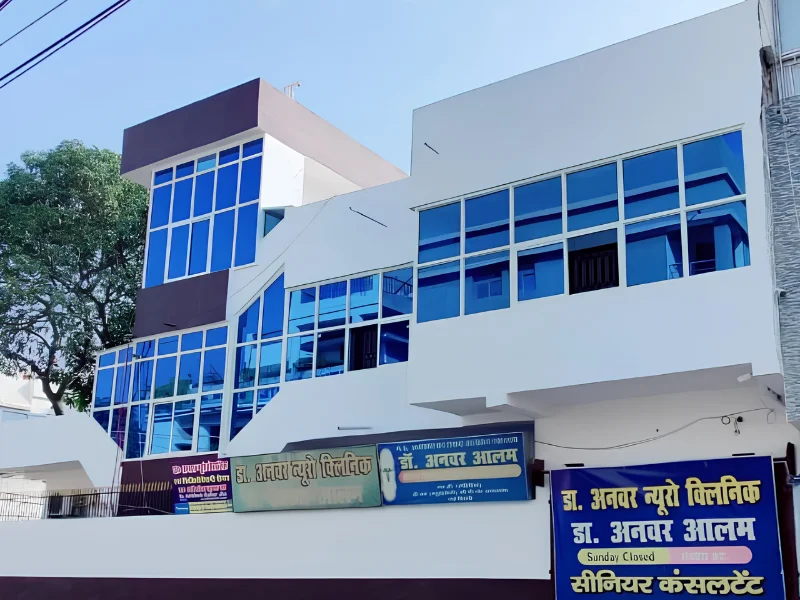
Dr. Anwar Neuro Clinic Address: K2, P.C. Colony, Lane opposite Metro Pillar SP-8/P6, Malahi Pakri Chowk, Kankarbagh, Patna, Bihar 800020
FAQs About Neuro-Ophthalmology Treatment in Patna
A neuro-ophthalmology evaluation may be appropriate when vision changes cannot be adequately explained by a routine eye problem, particularly when there is sudden or unexplained vision loss, double vision, visual field loss, pain with eye movement, abnormal colour vision, or visual symptoms accompanied by neurological problems.
Recovery depends on what caused the optic nerve injury. Inflammatory conditions such as some forms of optic neuritis may show substantial visual improvement, whereas damage caused by severe or prolonged nerve injury may be permanent. Early identification of the cause is important for protecting remaining vision.
There is no single recovery period for every case. Vision affected by typical optic neuritis often begins improving after the acute phase, with further recovery occurring over the following weeks and months. Recovery can take longer or be less complete when the optic neuritis is caused by a different or more severe underlying condition.
Some neurological eye conditions can improve significantly when the underlying cause is identified and treated, while others may leave lasting visual changes. The outcome depends on the specific condition, severity, affected structures, and how quickly appropriate treatment begins.
Many patients with typical optic neuritis experience substantial visual recovery, although the degree and speed of improvement vary. Some may continue to notice subtle changes in colour, contrast, or visual quality even after visual acuity improves.
Keeping the optic nerve healthy largely depends on protecting overall eye and neurological health. Regular eye examinations can help identify vision or optic nerve changes early, while managing conditions such as diabetes, high blood pressure, and other health problems can reduce the risk of nerve damage. A balanced diet, regular physical activity, avoiding smoking, and following prescribed treatment for existing medical conditions can also support long-term eye health.