

Movement Disorders Treatment in Patna, Bihar

Movement Disorders Specialist in Patna, Bihar
Dr. Anwar Alam, MBBS, MD (General Medicine), DM (Neurology)
Dr. Anwar Alam has 20 years of clinical experience in neurology and evaluates patients with Parkinson’s disease, tremors, stiffness, slow movements, abnormal involuntary movements, walking difficulties, balance problems and other neurological conditions. He also serves as Professor & Head, Neurology, NMCH Patna.
Patients have come from Patna as well as Sitamarhi, Muzaffarpur, Gaya, Ara, Chhapra, Begusarai, Hajipur, Supaul, Mokama, other cities and villages across Bihar, and Nepal border areas.
On Google, Dr. Anwar Alam has a 4.7-star rating based on 940+ patient reviews, reflecting experiences and feedback shared by patients and families who have consulted him for neurological care.
During evaluation, he looks at when the movement started, whether it occurs at rest or during activity, which body parts are involved, whether symptoms are getting worse, and whether stiffness, weakness, balance problems, speech changes or other neurological symptoms are present.
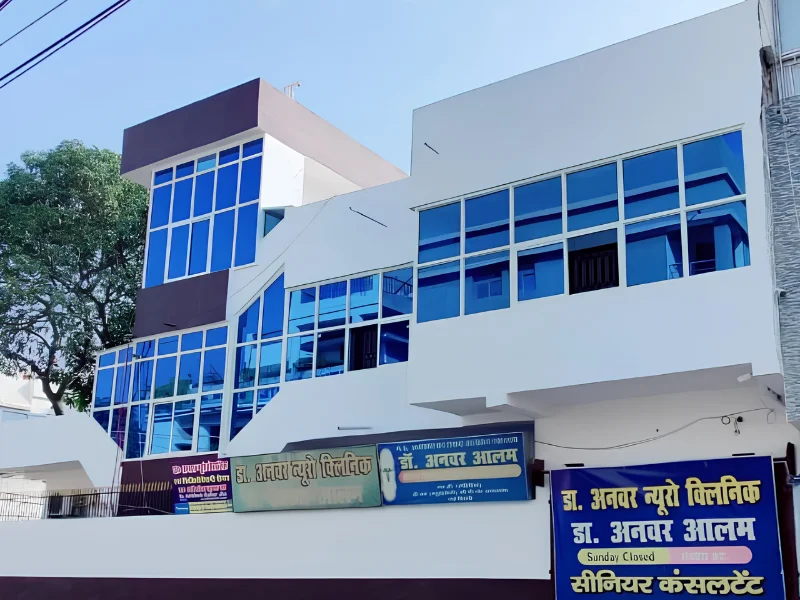
At Dr Anwar Neuro Clinic, Kankarbagh, Patna, patients with suspected movement disorders are assessed according to their individual symptoms and examination findings before further testing or treatment is considered.
Understanding Movement Disorders
Movement disorders are neurological conditions that change the way a person controls movement. Some people may find their movements becoming slower and harder to perform, while others experience unwanted shaking, jerking, twisting, or other uncontrolled movements. The important point is that “movement disorder” is a broad term rather than one particular disease.
Parkinson’s disease may cause slowness, stiffness and tremor. Essential tremor commonly produces rhythmic shaking, often during activities. Dystonia can cause sustained or repeated muscle contractions that pull a body part into an unusual position. Myoclonus causes brief muscle jerks, while chorea produces irregular, unpredictable movements.
Because several conditions can produce similar-looking symptoms, the way a movement occurs can provide important clues during a neurological assessment.
Understanding Movement Disorders
Movement disorders are neurological conditions that change the way a person controls movement. Some people may find their movements becoming slower and harder to perform, while others experience unwanted shaking, jerking, twisting, or other uncontrolled movements. The important point is that “movement disorder” is a broad term rather than one particular disease. Parkinson’s disease may cause slowness, stiffness and tremor. Essential tremor commonly produces rhythmic shaking, often during activities. Dystonia can cause sustained or repeated muscle contractions that pull a body part into an unusual position. Myoclonus causes brief muscle jerks, while chorea produces irregular, unpredictable movements.
Because several conditions can produce similar-looking symptoms, the way a movement occurs can provide important clues during a neurological assessment.
Common Symptoms of Movement Disorders
The symptoms depend on the type of movement disorder and the parts of the body affected.
1. Tremor
You may notice rhythmic shaking of the hands, head, legs or another part of the body. The tremor may occur when resting, holding a position or performing an activity.
2. Slow Movement
Simple activities such as getting up from a chair, buttoning clothes, writing or walking may gradually take longer.
3. Muscle Stiffness
The arms, legs, neck or trunk may feel tight or difficult to move freely.
4. Uncontrolled Movements
Some people develop repeated, twisting, jerking or irregular movements that are difficult to control.
5. Abnormal Posture
A hand, foot, neck or another body part may repeatedly pull or turn into an unusual position.
6. Walking Changes
You may notice smaller steps, shuffling, hesitation when starting to walk, difficulty turning or a change in the normal walking pattern.
7. Balance Problems
Some movement disorders can interfere with postural control and make a person more likely to stumble or fall.
8. Sudden Muscle Jerks
Brief, unexpected jerks involving one muscle or several muscles can occur in conditions associated with myoclonus.
9. Changes in Speech or Voice
Speech may become softer, less clear or altered in rhythm, depending on the underlying condition.
10. Difficulty With Routine Activities
Movement symptoms may interfere with eating, writing, dressing, using a phone, walking or other everyday tasks.
Note: A tremor or unusual movement does not by itself establish a diagnosis. Different neurological conditions, medicines and some medical problems can produce similar symptoms.
Testimonials & Reviews
What Our Patients Say
Trustindex verifies that the original source of the review is Google. Good doctor and best treatmentPosted on GoogleTrustindex verifies that the original source of the review is Google. वैरी गुड डॉ साहब सर जी हैPosted on GoogleTrustindex verifies that the original source of the review is Google. बहुत-बहुत धन्यवाद सर आपको आपके कारण काफी संतोषजनक महसूस कर रहा हूंPosted on GoogleTrustindex verifies that the original source of the review is Google. Happy to share after 1st visit I'm cured , all staffs are helpful in nature. And I'm fully satisfiedPosted on GoogleTrustindex verifies that the original source of the review is Google. Best doctor in patna ,K 2 P C colony Malahipakari chowk.Posted on GoogleTrustindex verifies that the original source of the review is Google. Sir Paisent satisfactionPosted on GoogleTrustindex verifies that the original source of the review is Google. Dr Anwar Alam sir is a good doctor. I am satisfied with you . His treatment is very good. ThanksPosted on GoogleTrustindex verifies that the original source of the review is Google. I recently met Dr. Anwar Alam in Patna, and I would like to share my positive experience. For the past 6 months, my mother has been under his care, and we are very satisfied with the treatment provided. Her condition has improved significantly, and she is now feeling much more relaxed and comfortable. Dr. Anwar Alam is not only highly skilled but also very cooperative and understanding. He listens patiently and treats his patients with great care and respect. His approach makes us feel like we are consulting a trusted family doctor. We are truly impressed with his treatment and overall behavior. I highly recommend him to anyone seeking quality medical carePosted on GoogleTrustindex verifies that the original source of the review is Google. Dr Anwar Alam is a good doctor in patna. His treatment is very good.I am satisfied with you.All staffs behaviour is very good .Thank you .Posted on GoogleTrustindex verifies that the original source of the review is Google. Best Doctor of neurologist in patna Dr Anwar Alam mai bhut parshan tha apni beti ko leker Dr Anwar Alam ke treatment se hamari beti bikul thik ho gayi.thans Doctor sb.
Causes and Risk Factors
There is no single cause behind all movement disorders. Some develop because of changes within specific brain circuits, while others may be associated with inherited conditions, medicines, previous brain injury or another medical problem. In some patients, no definite cause is identified.Possible contributing factors include:
— Neurodegenerative conditions: Parkinson’s disease and other neurological disorders can affect the brain pathways responsible for movement.
— Inherited conditions: Some movement disorders can run in families and may become apparent earlier in life.
— Medicines: Certain medicines can cause or worsen tremor, parkinsonism or other abnormal movements.
— Stroke or brain injury: Damage to particular areas of the brain can sometimes lead to movement abnormalities.
— Metabolic or nutritional factors: Vitamin deficiencies, thyroid imbalances, and certain metabolic conditions may sometimes play a role in the development of abnormal movements.
— Autoimmune or inflammatory disorders: Some neurological diseases can affect movement as part of their presentation.
A risk factor does not necessarily mean that it is the cause of a person’s symptoms. The diagnosis is based on the overall symptom pattern along with findings from the neurological examination.
How Dr. Anwar Alam Evaluates Movement Disorders
A movement disorder can be difficult to describe in words. Saying “my hand shakes” does not tell the doctor whether the shaking occurs at rest, while writing, while holding an object, or only during a particular movement. These details can make a significant difference.
Dr. Anwar Alam may ask:
— When did the movement first appear?
— Did it begin suddenly or gradually?
— Does the shaking occur even when the affected body part is relaxed?
— Does it become more noticeable during movement or activity?
— Is one side affected more than the other?
— Has the movement changed over time?
— Are there stiffness or slow movements?
— Have walking or balance changed?
— Are there speech, swallowing or coordination problems?
— What medicines and supplements are currently being taken?
— Does anyone in the family have a similar movement problem?
The neurological assessment may include checking muscle power, reflexes, muscle tone, coordination, eye movements, walking pattern, balance, and the specific features of the unusual movement.
If the movement happens only occasionally, recording a short video on a phone and showing it during consultation can also help the doctor understand what happens outside the clinic.
Diagnostic Tests That May Be Recommended
Many movement disorders can be assessed primarily through medical history and neurological examination. Tests are added when the doctor needs to investigate another possible cause or clarify an uncertain diagnosis.
Blood Tests
Depending on the symptoms, blood tests may be used to look for thyroid problems, vitamin deficiencies, metabolic abnormalities and other medical conditions that can contribute to movement symptoms.
MRI or Other Brain Imaging
Brain imaging may be recommended when the symptoms suggest a structural problem, previous stroke, brain injury or another neurological condition.
EMG
Electromyography may be useful in selected cases to assess muscle electrical activity when the doctor needs more information about jerks or other abnormal movements.
DAT Scan
A dopamine transporter scan may sometimes help in the evaluation of parkinsonian symptoms or certain tremors. It is not required for every patient and should be interpreted alongside the clinical examination.
Genetic Testing
Genetic testing may be considered when the patient’s age, family history or clinical pattern raises suspicion of an inherited movement disorder.
Not every patient requires all of these tests. The appropriate investigation depends on the symptoms and clinical findings.
Movement Disorders Treatment in Patna
Treatment depends on the specific movement disorder and what is causing it. Treatment needs to be selected according to the specific movement disorder, as the same approach is not suitable for every patient.
Depending on the diagnosis, management may include:
— Medicines: Certain medicines can help control tremor, stiffness, slow movement, dystonia or other abnormal movements.
— Physiotherapy: Exercise and physical rehabilitation can support strength, flexibility, balance, walking and functional movement.
— Occupational therapy: Practical strategies can help patients manage activities such as dressing, eating, writing and other daily tasks.
— Speech and swallowing therapy: These may be useful when a movement disorder affects speech or swallowing.
— Botulinum toxin injections: In selected conditions such as focal dystonia, targeted injections may help reduce excessive muscle contractions.
— Treatment of the underlying cause: When a movement problem results from another medical condition or medication, addressing that cause may improve symptoms.
More advanced treatments, including procedures such as deep brain stimulation, are considered only for selected patients with particular disorders and specific clinical indications.
What Patients Can Expect From Ongoing Care
Movement disorders may change gradually, and treatment sometimes needs to change with them. Follow-up allows the neurologist to see whether symptoms are improving, remaining stable or becoming more troublesome.
During follow-up, attention may be given to:
— Tremor and other involuntary movements
— Stiffness and movement speed
— Walking and balance
— Medication response and side effects
— Speech and swallowing
— Ability to perform everyday activities
For Parkinson’s disease, regular follow-up is important because symptoms can evolve and the treatment plan may need to be adjusted as the condition progresses. Regular assessment helps keep the treatment plan aligned with the patient’s current needs.
Why Timely Diagnosis Matters
A new tremor or abnormal movement should not automatically be labelled as Parkinson’s disease. Essential tremor, medication effects, metabolic problems, stroke and several other neurological conditions can produce overlapping symptoms.
A timely neurological evaluation can help identify the type of movement problem, look for potentially treatable causes and determine whether further testing is appropriate.
If sudden neurological changes occur along with an unusual movement, such as new weakness, trouble speaking, confusion, or major balance problems, prompt medical evaluation is important.
Why Choose Dr. Anwar Neuro Clinic for Movement Disorders Treatment in Patna?
When a person has an unexplained tremor or involuntary movement, simply treating the visible symptom may not answer the more important question: why is it happening?
At Dr Anwar Neuro Clinic, the assessment focuses on the movement pattern, associated neurological symptoms, medical history and examination findings before deciding on further management.
Patients seeking movement disorders treatment in Patna can benefit from:
— Consultation with Dr. Anwar Alam, MBBS, MD (General Medicine), DM (Neurology), with 20 years of clinical experience
— Evaluation of tremor, Parkinsonism, stiffness, slow movements and involuntary movements
— Evaluation of gait, balance, coordination, and overall neurological function
— Review of previous scans, prescriptions and medical reports
— Guidance on investigations when clinically indicated
— Treatment planning based on the identified or suspected condition
— Follow-up for changing, persistent or progressive movement symptoms
— Guidance regarding rehabilitation and supportive care when appropriate
— Conveniently located in Kankarbagh with parking available for cars and two-wheelers
1. Intention
The intention is simple: help patients understand what may be causing their abnormal movement, distinguish between possible neurological conditions and guide them toward appropriate treatment and follow-up.
2. 20 Years of Neurology Experience
Dr. Anwar Alam has 20 years of clinical experience in neurology and evaluates patients with tremor, Parkinson’s disease, stiffness, slow movement, abnormal involuntary movements, walking difficulty and balance problems.
His assessment considers the nature of the movement as well as other neurological symptoms that may help explain the underlying condition.
3. 4.7-Star Rating Across 940+ Google Reviews
With a 4.7-star Google rating based on 940+ patient reviews, Dr. Anwar Alam has received extensive feedback from patients and families who have consulted him for neurological care, including concerns related to vertigo and balance disorders.
Patients Visit From Across Patna and Bihar
Patients visit Dr. Anwar Neuro Clinic for movement disorders, tremor, Parkinson’s disease, stiffness, involuntary movements, walking difficulties and balance problems from different parts of Patna and across Bihar, including Hanuman Nagar, Gardanibagh, Pahari, Kadamkuan, Rajendra Nagar, Boring Road, Sri Krishna Puri (SK Puri), Patliputra Colony, Bailey Road, Raja Bazar, Ashiana-Digha, Phulwari Sharif, Gandhi Maidan, Ashok Rajpath, Rajeev Nagar, Kurji, Gola Road, Mithapur, Jai Prakash Nagar, Lohia Nagar, Sampatchak, Parsa, Ranipur, Anisabad, Beur, Khagaul, Danapur, Sipara, Bihta, Hajipur, Sonepur, and neighbouring areas. Patients from these locations travel to the clinic’s single Kankarbagh location for consultation; there are no other branch clinics.
Dr. Anwar Neuro Clinic Address: K2, P.C. Colony, Lane opposite Metro Pillar SP-8/P6, Malahi Pakri Chowk, Kankarbagh, Patna, Bihar 800020
FAQs About Movement Disorders Treatment in Patna
A neurologist can evaluate unexplained tremor, stiffness, slow movements, involuntary movements, walking changes and balance problems. Dr. Anwar Alam evaluates movement-related neurological symptoms at Dr Anwar Neuro Clinic, Kankarbagh, Patna.
Many movement disorders can be managed, although treatment depends on the specific diagnosis. Options may include medicines, physiotherapy, occupational or speech therapy, targeted botulinum toxin treatment for selected conditions and, in certain cases, specialist procedures.
Consider an evaluation when the movement is new, repeatedly occurring, becoming more noticeable, interfering with work or daily activities, or accompanied by stiffness, walking difficulty, balance problems, weakness or other neurological symptoms.
No. Tremor has several possible causes. Essential tremor, Parkinson’s disease, certain medicines and other neurological or medical conditions can produce shaking. The timing and characteristics of the tremor, together with the neurological examination, help determine the likely cause.
Testing depends on the suspected cause. Depending on the situation, a doctor may recommend blood tests, MRI or other imaging, EMG, genetic testing or a DAT scan. Many movement disorders can be assessed primarily through history and neurological examination.
Yes. Some medicines can contribute to tremor, parkinsonism or other abnormal movements. Tell your neurologist about all prescription medicines, over-the-counter medicines and supplements you are taking so they can be considered during the assessment.