

Memory Problems and Dementia Specialist in Patna, Bihar

Stroke/Lakwa Specialist in Patna, Bihar
Dr. Anwar Alam, MBBS, MD (General Medicine), DM (Neurology)
Dr. Anwar Alam has 20 years of clinical experience in neurology and has evaluated and treated patients with memory problems, dementia, Alzheimer’s disease, confusion, cognitive decline, behavioural changes, and other neurological conditions. Patients have come from Patna as well as Sitamarhi, Muzaffarpur, Gaya, Ara, Chhapra, Begusarai, Hajipur, Supaul, Mokama, other cities and villages across Bihar, and Nepal border areas.
On Google, Dr. Anwar Alam has a 4.7-star rating based on 940+ patient reviews, reflecting feedback shared by patients and families who have consulted him for neurological care. His approach focuses on understanding when the memory changes began, how they are affecting daily life, whether there are changes in speech, behaviour, judgment, sleep, walking, or independence, and whether medicines or other health conditions may be contributing.
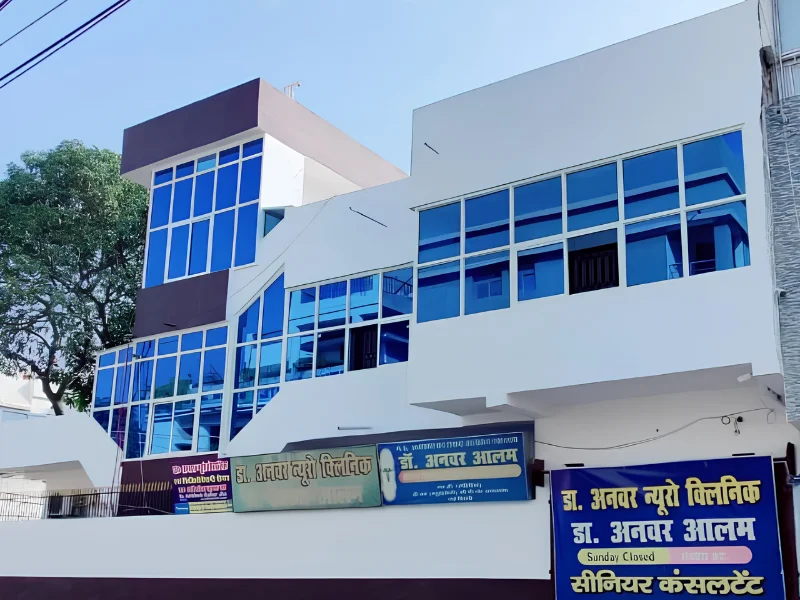
At Dr Anwar Neuro Clinic, Kankarbagh, Patna, patients with memory decline or suspected dementia are assessed according to their symptoms, age, medical history, functional changes, and neurological findings. Families are also encouraged to share what they have noticed at home because these observations can be important when evaluating cognitive decline.
Understanding Memory Problems and Dementia
Memory problems do not always mean dementia. Temporary forgetfulness can occur with stress, depression, poor sleep, thyroid problems, vitamin deficiencies, infections, certain medicines, or other medical conditions. In such situations, treating the underlying problem may improve memory and concentration.
Dementia is different. It is a term used for a decline in memory, thinking, reasoning, language, or other cognitive abilities severe enough to interfere with everyday independence. Alzheimer’s disease is the most common cause, but dementia can also develop because of vascular disease, Lewy body disease, frontotemporal disorders, Parkinson’s-related changes, and other neurological conditions.
The type and severity of symptoms vary from one person to another. Some patients first become forgetful, while others may show changes in judgment, language, behaviour, personality, or ability to manage routine tasks.
Common Symptoms of Memory Problems and Dementia
1. Forgetting recent conversations or events
A person may repeatedly ask the same question or forget information they were told only a short time earlier.
2. Misplacing everyday items frequently
Keys, money, glasses, or mobile phones may be left in unusual places, with increasing difficulty remembering where they were kept.
3. Difficulty finding the right words
The person may pause often during conversation, use incorrect words, or struggle to name familiar objects.
4. Getting confused about dates or places
They may lose track of the day, month, route, or become disoriented even in familiar surroundings.
5. Trouble handling routine tasks
Managing money, paying bills, taking medicines correctly, cooking, shopping, or using familiar devices may become increasingly difficult.
6. Changes in judgment or decision-making
Family members may notice poor financial decisions, unsafe behaviour, or reduced awareness of risks.
7. Changes in personality or behaviour
Irritability, withdrawal, suspicion, anxiety, apathy, inappropriate
behaviour, or unusual emotional reactions may develop.
Note: Occasional forgetfulness is common and does not automatically indicate dementia. The concern increases when memory or thinking problems are persistent, worsening, or interfering with everyday independence.
Testimonials & Reviews
What Our Patients Say
Trustindex verifies that the original source of the review is Google. Good doctor and best treatmentPosted on GoogleTrustindex verifies that the original source of the review is Google. वैरी गुड डॉ साहब सर जी हैPosted on GoogleTrustindex verifies that the original source of the review is Google. बहुत-बहुत धन्यवाद सर आपको आपके कारण काफी संतोषजनक महसूस कर रहा हूंPosted on GoogleTrustindex verifies that the original source of the review is Google. Happy to share after 1st visit I'm cured , all staffs are helpful in nature. And I'm fully satisfiedPosted on GoogleTrustindex verifies that the original source of the review is Google. Best doctor in patna ,K 2 P C colony Malahipakari chowk.Posted on GoogleTrustindex verifies that the original source of the review is Google. Sir Paisent satisfactionPosted on GoogleTrustindex verifies that the original source of the review is Google. Dr Anwar Alam sir is a good doctor. I am satisfied with you . His treatment is very good. ThanksPosted on GoogleTrustindex verifies that the original source of the review is Google. I recently met Dr. Anwar Alam in Patna, and I would like to share my positive experience. For the past 6 months, my mother has been under his care, and we are very satisfied with the treatment provided. Her condition has improved significantly, and she is now feeling much more relaxed and comfortable. Dr. Anwar Alam is not only highly skilled but also very cooperative and understanding. He listens patiently and treats his patients with great care and respect. His approach makes us feel like we are consulting a trusted family doctor. We are truly impressed with his treatment and overall behavior. I highly recommend him to anyone seeking quality medical carePosted on GoogleTrustindex verifies that the original source of the review is Google. Dr Anwar Alam is a good doctor in patna. His treatment is very good.I am satisfied with you.All staffs behaviour is very good .Thank you .Posted on GoogleTrustindex verifies that the original source of the review is Google. Best Doctor of neurologist in patna Dr Anwar Alam mai bhut parshan tha apni beti ko leker Dr Anwar Alam ke treatment se hamari beti bikul thik ho gayi.thans Doctor sb.
Memory Problems and Dementia: Causes and Risk Factors
There is no single cause of every memory problem. Some causes are potentially reversible, while others are related to progressive neurological disease.
Possible causes and contributing factors include:
— Alzheimer’s disease
— Vascular changes caused by previous strokes or small-vessel disease
— Lewy body dementia
— Frontotemporal dementia
— Parkinson’s disease and related disorders
— Vitamin B12 or other nutritional deficiencies
— Thyroid disorders
— Depression, anxiety, or severe sleep disturbance
— Certain medicines that affect alertness or cognition
— Excessive alcohol use
— Previous head injury
— Infections or metabolic disturbances in selected patients
Age is one of the strongest risk factors for dementia, but dementia should not be considered an unavoidable part of ageing. A person can grow older without developing significant cognitive impairment.
How Dr. Anwar Alam Evaluates Memory Problems and Dementia
The evaluation begins by understanding what has actually changed and when the changes started. Because patients may not always notice their own memory or behavioural difficulties, input from a spouse, child, or close family member can be extremely helpful.
Dr. Anwar Alam may ask about:
- n memory problems first became noticeable
- Whether symptoms are getting worse
- Difficulties with money, medicines, cooking, or travelling
- Changes in speech or understanding
- Behavioural or personality changes
- Sleep problems
- Walking or balance changes
- Previous stroke or head injury
- Current medicines
- Diabetes, thyroid disease, blood pressure, and other medical conditions
- Family history of dementia or neurological disease
A neurological examination may assess strength, reflexes, coordination, walking, eye movements, and other functions depending on the symptoms.
Cognitive assessment may also look at memory, attention, language, orientation, problem-solving, and the ability to follow instructions.
The goal is not simply to confirm that someone is forgetful, but to understand why the problem is occurring and how much it is affecting daily independence.
Diagnostic Tests That May Be Recommended for Memory Problems and Dementia
Not every patient with forgetfulness needs extensive testing. Investigations are selected according to the patient’s age, symptoms, examination findings, speed of progression, and medical history.
Blood Tests
Blood tests may be recommended to look for potentially treatable contributors such as thyroid dysfunction, vitamin deficiencies, abnormal blood sugar, liver or kidney problems, infections, or electrolyte disturbances.
MRI or CT Scan of the Brain
Brain imaging may help identify previous strokes, vascular changes, tumours, hydrocephalus, significant brain shrinkage, or other structural problems that could contribute to cognitive symptoms.
Cognitive Assessment
Structured memory and thinking tests can help assess different areas of cognition and provide a baseline for future comparison.
EEG
An EEG may be considered in selected patients if episodes of confusion, unusual behaviour, loss of awareness, or possible seizures raise concern for abnormal electrical activity in the brain.
Additional investigations may be advised when symptoms are unusual, progress rapidly, or do not fit the pattern of a common dementia.
Treatment Options for Memory Problems and Dementia in Patna
No two stroke cases are managed the same way — the plan hinges on which type occurred, how fast the patient got to care, and how much damage has already set in. Broadly, care may involve:
Treatment depends on the underlying cause. A patient with memory difficulty due to a vitamin deficiency, thyroid disorder, depression, sleep problem, or medicine side effect may need a very different approach from someone with Alzheimer’s disease or vascular dementia.
Management may include:
— Treatment of reversible causes where identified
— Medicines that may help cognitive or behavioural symptoms in suitable patients
— Control of blood pressure, diabetes, cholesterol, and other vascular risk factors
— Review of medicines that may worsen confusion or alertness
— Sleep management
— Physical activity and mobility support
— Cognitive stimulation and structured daily routines
— Management of anxiety, agitation, sleep disturbance, or behavioural symptoms when required
— Guidance for family members and caregivers
— Regular neurological follow-up
No medicine can reverse every type of dementia, and treatment results vary. The focus is usually on preserving function where possible, controlling associated symptoms, improving safety, and supporting the patient and family through changes over time.
What Patients Can Expect From Ongoing Care
Memory disorders often require follow-up because symptoms and day-to-day needs can change gradually. During review visits, the neurologist may assess whether memory, behaviour, mobility, sleep, or independence has changed and whether medicines remain appropriate.
Families may also need guidance on practical issues such as medication supervision, fall prevention, financial safety, wandering risk, sleep disturbances, driving, and changes in daily routine.
As dementia progresses, the care plan may need to change. The aim is to make these adjustments based on the patient’s actual abilities and needs rather than following a fixed schedule for every person.
Why Timely Diagnosis Matters
Persistent memory loss should not simply be dismissed as “old age.” Some causes of cognitive decline are treatable, while others can be better managed when recognised early.
Timely evaluation can help identify reversible medical problems, distinguish dementia from depression or other conditions, clarify the likely type of cognitive disorder, and allow families to plan ahead.
It also gives the patient and family time to discuss medicines, safety, finances, daily support, and future care while the patient can still participate meaningfully in these decisions.
A sudden change in memory or confusion is different from gradually progressive dementia. Sudden confusion, new weakness, speech difficulty, severe headache, seizures, or loss of consciousness requires urgent medical assessment, because it may indicate an acute medical or neurological problem.
Why Choose Dr. Anwar Neuro Clinic for Memory Problems and Dementia Treatment in Patna?
Memory loss often affects the entire family, not just the individual experiencing it. At Dr Anwar Neuro Clinic, the focus is on understanding the patient’s symptoms in context, listening to family observations, and explaining the findings in clear language.
Patients and families can expect:
— Consultation with Dr. Anwar Alam, MBBS, MD, DM (Neurology), with 20 years of clinical experience
— Evaluation of memory loss, cognitive decline, confusion, behavioural changes, and suspected dementia
— Assessment for Alzheimer’s disease and other neurological causes of dementia
— Review of previous brain scans, prescriptions, and medical records
— Guidance on blood tests and brain imaging when clinically appropriate
— Individualised treatment rather than the same approach for every patient
— Ongoing neurological follow-up as symptoms and care needs change
— Guidance for families and caregivers on practical day-to-day concerns
— Clean, comfortable clinic environment with trained staff
— Convenient Kankarbagh location with car and two-wheeler parking
1. Intention
The intention is simple: help patients and families understand why memory or thinking abilities are changing, identify treatable causes where possible, and provide a realistic plan for treatment, safety, and ongoing care.
2. 20 Years of Experience & 90% Success Rate
Dr. Anwar Alam has 20 years of clinical experience in neurology and evaluates patients with memory loss, dementia, Alzheimer’s disease, behavioural changes, confusion, and other cognitive and neurological concerns.
Dr. Anwar Alam has 20 years of clinical experience in neurology and evaluates patients with memory loss, dementia, Alzheimer’s disease, behavioural changes, confusion, and other cognitive and neurological concerns.
His experience in adult neurological care is especially relevant because memory problems can overlap with stroke, Parkinson’s disease, seizures, sleep disorders, medication effects, and other neurological conditions that may need to be considered during assessment.
3. 4.7-Star Rating Across 939+ Google Reviews
Dr. Anwar Alam has a 4.7-star Google rating based on 940+ patient reviews, reflecting feedback shared by patients and families who have consulted him for neurological care.
For memory and dementia concerns, where family involvement and long-term follow-up are often important, clear communication and continuity of care can make the evaluation process easier to understand and manage.
Patients Visit From Across Patna and Bihar
Patients and families visit Dr. Anwar Neuro Clinic for memory problems, dementia, Alzheimer’s disease, and cognitive decline evaluation from different parts of Patna and across Bihar, including Hanuman Nagar, Gardanibagh, Pahari, Kadamkuan, Rajendra Nagar, Boring Road, Sri Krishna Puri (SK Puri), Patliputra Colony, Bailey Road, Raja Bazar, Ashiana-Digha, Phulwari Sharif, Gandhi Maidan, Ashok Rajpath, Rajeev Nagar, Kurji, Gola Road, Mithapur, Jai Prakash Nagar, Lohia Nagar, Sampatchak, Parsa, Ranipur, Anisabad, Beur, Khagaul, Danapur, Sipara, Bihta, Hajipur, Sonepur, and neighbouring areas. Patients from these locations travel to the clinic’s single Kankarbagh location for consultation; there are no other branch clinics.
Dr. Anwar Neuro Clinic Address: K2, P.C. Colony, Lane opposite Metro Pillar SP-8/P6, Malahi Pakri Chowk, Kankarbagh, Patna, Bihar 800020
FAQs About Memory Problems and Dementia Specialist in Patna, Bihar
You should consider neurological evaluation when forgetfulness is becoming more frequent, worsening over time, or interfering with daily activities such as handling money, taking medicines, travelling, cooking, working, or recognising familiar information.
Normal ageing may involve occasionally forgetting a name or where an item was kept but remembering it later. Dementia causes more persistent problems with memory or thinking that gradually interfere with daily independence, judgment, communication, or routine activities.
Depending on the patient, evaluation may include cognitive assessment, blood tests, MRI or CT of the brain, and occasionally EEG or other investigations. Not every patient requires every test.
No. Memory problems can occur because of stress, poor sleep, depression, thyroid problems, vitamin deficiencies, medicines, infections, and other medical conditions. Dementia is diagnosed only after the pattern, severity, and impact of cognitive changes are properly assessed.
It depends on the cause. Some conditions causing memory problems may improve when the underlying problem is treated. Progressive dementias such as Alzheimer’s disease do not currently have a complete cure, but treatment and supportive care may help manage symptoms and maintain function for as long as possible.
This depends on the stage of dementia and which abilities are affected. Some people with early cognitive impairment can remain independent with minor support, while others gradually require help with medicines, finances, cooking, travel, or personal care. Regular assessment helps families decide what level of support is appropriate.