

Gait Difficulty and Walking Problems Treatment in Patna, Bihar

Gait and Walking Problem Treatment Specialist in Patna, Bihar
Dr. Anwar Alam, MBBS, MD (General Medicine), DM (Neurology)
Dr. Anwar Alam has 20 years of clinical experience in neurology and evaluates patients with walking difficulties, gait disorders, balance problems, weakness, numbness, movement disorders, and other neurological conditions. He also serves as Professor & Head, Neurology, NMCH Patna.
Patients seeking neurological consultation visit the clinic from Patna, Sitamarhi, Muzaffarpur, Gaya, Ara, Chhapra, Begusarai, Hajipur, Supaul, Mokama, other parts of Bihar, and areas near the Nepal border.
Dr. Anwar Alam has a 4.7-star Google rating based on 940+ patient reviews, reflecting feedback shared by patients and families who have consulted him for neurological care.
At Dr Anwar Neuro Clinic, Kankarbagh, Patna, patients with walking and gait concerns are assessed according to their symptoms, medical history, neurological findings, and previous reports.
Understanding Gait Difficulty and Walking Problems
Gait refers to the way a person stands, steps, balances, and moves while walking. A gait problem develops when something interferes with one or more of these functions. The change may be subtle, such as taking smaller steps, or more noticeable, such as needing support to walk.
Walking difficulties can arise from many different conditions. A person may have weakness after a stroke, reduced sensation due to neuropathy, stiffness associated with Parkinson’s disease, problems with coordination, spinal disorders, muscle disease, or another neurological condition.
This is why gait treatment should not be based only on how the walking pattern looks. Finding the reason behind the change is important when deciding what treatment or rehabilitation may help.
Common Symptoms of Gait Difficulty and Walking Problems
The way walking problems appear can vary considerably between patients. Common signs include:
1. Unsteady Walking
A person may feel unstable while standing or walking and may need to hold onto nearby objects.
2. Frequent Falls
Repeated falls or near-falls may indicate problems with balance, strength, sensation, coordination, or movement control.
3. Short or Shuffling Steps
Some neurological conditions can cause a person to take unusually small steps or appear to shuffle while walking.
4. Foot Dragging
Weakness or impaired control may make it difficult to lift the front of the foot properly during a step.
5. Leg Stiffness
Increased muscle tone can make one or both legs feel stiff and interfere with a normal walking pattern.
6. Difficulty Starting or Turning
Some patients may struggle to begin walking, change direction, or turn safely.
7. Walking-Related Pain
Pain in the feet, legs, hips, back, or other areas can alter how a person walks and may gradually affect mobility.
8. Balance and Coordination Problems
Difficulty coordinating the legs or maintaining stability can make walking on uneven surfaces, stairs, or crowded areas challenging.
Note: A new or progressively worsening walking problem, especially when accompanied by weakness, numbness, speech changes, dizziness, or repeated falls, should be medically assessed.
Testimonials & Reviews
What Our Patients Say
Trustindex verifies that the original source of the review is Google. Good doctor and best treatmentPosted on GoogleTrustindex verifies that the original source of the review is Google. वैरी गुड डॉ साहब सर जी हैPosted on GoogleTrustindex verifies that the original source of the review is Google. बहुत-बहुत धन्यवाद सर आपको आपके कारण काफी संतोषजनक महसूस कर रहा हूंPosted on GoogleTrustindex verifies that the original source of the review is Google. Happy to share after 1st visit I'm cured , all staffs are helpful in nature. And I'm fully satisfiedPosted on GoogleTrustindex verifies that the original source of the review is Google. Best doctor in patna ,K 2 P C colony Malahipakari chowk.Posted on GoogleTrustindex verifies that the original source of the review is Google. Sir Paisent satisfactionPosted on GoogleTrustindex verifies that the original source of the review is Google. Dr Anwar Alam sir is a good doctor. I am satisfied with you . His treatment is very good. ThanksPosted on GoogleTrustindex verifies that the original source of the review is Google. I recently met Dr. Anwar Alam in Patna, and I would like to share my positive experience. For the past 6 months, my mother has been under his care, and we are very satisfied with the treatment provided. Her condition has improved significantly, and she is now feeling much more relaxed and comfortable. Dr. Anwar Alam is not only highly skilled but also very cooperative and understanding. He listens patiently and treats his patients with great care and respect. His approach makes us feel like we are consulting a trusted family doctor. We are truly impressed with his treatment and overall behavior. I highly recommend him to anyone seeking quality medical carePosted on GoogleTrustindex verifies that the original source of the review is Google. Dr Anwar Alam is a good doctor in patna. His treatment is very good.I am satisfied with you.All staffs behaviour is very good .Thank you .Posted on GoogleTrustindex verifies that the original source of the review is Google. Best Doctor of neurologist in patna Dr Anwar Alam mai bhut parshan tha apni beti ko leker Dr Anwar Alam ke treatment se hamari beti bikul thik ho gayi.thans Doctor sb.
Gait Difficulty and Walking Problems: Causes and Risk Factors
Walking problems can originate from the nervous system, muscles, joints, spine, or sensory systems. Identifying the underlying cause helps determine the appropriate treatment.
1. Stroke
A previous stroke can leave weakness, stiffness, altered sensation, or reduced control on one side of the body, affecting walking.
2. Parkinson’s Disease
Parkinson’s disease can cause shuffling steps, reduced movement, difficulty initiating walking, and problems turning or maintaining balance.
3. Peripheral Neuropathy
Reduced sensation or weakness in the feet and legs can interfere with balance and the ability to feel the ground properly.
4. Spinal Cord or Nerve Problems
Conditions affecting the spinal cord, nerve roots, or peripheral nerves can produce weakness, stiffness, numbness, or altered walking.
5. Muscle Disorders
Muscle weakness can make activities such as climbing stairs, rising from a chair, or walking longer distances difficult.
6. Cerebellar or Coordination Problems
Disorders affecting coordination can lead to an unsteady or broad-based walking pattern.
7. Vestibular and Balance Disorders
Problems affecting the body’s balance system can cause unsteadiness, dizziness, or difficulty walking confidently.
8. Joint or Foot Problems
Pain from the knees, hips, ankles, or feet can change the walking pattern even when the primary problem is not neurological.
9. Medication and Other Medical Factors
Certain medicines, reduced blood pressure, nutritional problems, or other medical conditions can sometimes contribute to dizziness, weakness, or instability.
A walking pattern alone does not establish the diagnosis. The underlying cause needs to be assessed in the context of the patient’s symptoms and examination.
How Dr. Anwar Alam Evaluates Gait Difficulty and Walking Problems
The evaluation begins with understanding what has changed in the patient’s walking. Dr. Anwar Alam may ask when the difficulty started, whether it developed suddenly or gradually, whether one or both legs are affected, and whether there have been falls, pain, numbness, weakness, dizziness, or other neurological symptoms.
Previous stroke, Parkinson’s disease, neuropathy, spinal problems, injuries, medicines, and other medical conditions may also be relevant. The neurological examination then looks at strength, muscle tone, reflexes, sensation, coordination, balance, and walking pattern.
The assessment may include:
— Observing the patient’s normal walking pattern
— Checking walking speed and step characteristics
— Assessing balance and turning
— Testing muscle strength and tone
— Examining reflexes and sensation
— Checking coordination and lower-limb control
This abnormal gait analysis helps identify whether the walking problem appears to be neurological, musculoskeletal, sensory, or related to another cause.
Diagnostic Tests That May Be Recommended
Testing is selected according to the clinical findings. Not every patient with difficulty walking requires the same investigations.
MRI Brain or Spine
Imaging may be recommended when symptoms suggest a problem involving the brain, spinal cord, or other neurological structures.
NCS and EMG
Nerve conduction studies and electromyography may be useful when peripheral nerve or muscle involvement is suspected.
Blood Tests
Depending on the symptoms, blood investigations may help identify metabolic, nutritional, inflammatory, or other medical factors contributing to weakness or neurological symptoms.
Balance or Vestibular Assessment
Additional assessment may be considered when dizziness or balance dysfunction appears to be contributing to walking difficulty.
Other Investigations
Further testing may be recommended when the clinical examination suggests a specific neurological or systemic condition.
Gait Difficulty and Walking Problems Treatment in Patna
Treatment depends on why the patient’s walking has changed. There is no single gait disorder treatment suitable for everyone. The management plan is developed after considering the underlying condition, severity of symptoms, mobility, and overall health.
Depending on the diagnosis, treatment may include:
— Medical treatment: Medicines may be used when an underlying neurological condition requires them.
— Management of nerve-related problems: Treatment may focus on conditions such as neuropathy when reduced sensation or weakness affects walking.
— Movement disorder management: Patients with Parkinson’s disease or other movement disorders may require condition-specific treatment.
— Rehabilitation: Physiotherapy and structured exercises may help improve strength, mobility, balance, and functional movement when appropriate.
— Fall-risk reduction: Patients with significant instability may need guidance on safer movement and daily activities.
— Treatment of associated pain: When walking is being altered by neurological or musculoskeletal pain, the underlying cause should be addressed.
For conditions such as scissor gait, treatment depends on why the legs are becoming stiff or crossing during walking. The underlying neurological cause needs to be identified rather than treating the gait pattern alone.
What Patients Can Expect From Ongoing Care
Walking ability can change over time, particularly when the underlying condition is progressive or recovery is still occurring after an injury or neurological event. Follow-up allows the doctor to reassess strength, balance, coordination, walking pattern, and response to treatment.
Some patients may need continued neurological care along with physiotherapy or rehabilitation. The focus is to help the patient maintain safe mobility and manage the condition responsible for the gait problem.
When Walking Problems Need Urgent Attention
A sudden change in walking should not be ignored, particularly when it occurs with other neurological symptoms. Immediate medical attention is important if walking difficulty develops suddenly alongside:
— Weakness or numbness on one side
— Difficulty speaking or understanding speech
— Sudden loss of coordination
— Severe dizziness or inability to stand
— New severe headache
— Loss of consciousness
Such a combination of symptoms may indicate a serious neurological problem, including stroke, and should be assessed without delay.
Why Choose Dr. Anwar Neuro Clinic for Gait Difficulty and Walking Problems Treatment in Patna?
A change in walking ability can have many possible explanations, from neurological conditions and nerve problems to balance difficulties or weakness. At Dr Anwar Neuro Clinic, the assessment focuses on identifying what may be affecting the patient’s mobility rather than addressing the walking pattern alone.
Patients looking for a gait specialist in Patna Bihar can benefit from:
— Consultation with Dr. Anwar Alam, MBBS, MD (General Medicine), DM (Neurology), backed by 20 years of experience in neurological care
— Evaluation of walking difficulties, gait abnormalities, falls, balance concerns, weakness, numbness, and movement-related problems
—— Neurological evaluation that examines muscle power, muscle tone, reflex responses, sensation, coordination, and the patient’s walking pattern
— Examination of available MRI, CT, EMG, NCS, blood reports, and previous medical records
— Advice on neurological investigations when the clinical findings indicate a need for further testing
— A management plan developed according to the identified cause and individual patient requirements
— Continued monitoring for symptoms that persist, progress, or affect daily mobility
— Kankarbagh location with parking facilities for cars and two-wheelers
1. Intention
The aim is straightforward: understand what is affecting the patient’s walking, investigate the possible neurological or medical cause, and help the patient move toward suitable treatment and continued care.
2. 20 Years of Experience & 90% Success Rate
Dr. Anwar Alam brings 20 years of experience in neurology to the evaluation of patients with altered gait, walking limitations, balance difficulties, movement disorders, neuropathy, weakness, and other neurological concerns.
He also serves as Professor & Head, Neurology, NMCH Patna, with clinical experience in assessing complex neurological symptoms that can affect mobility.
3. 4.7-Star Rating Across 939+ Google Reviews
Dr. Anwar Alam has a 4.7-star Google rating from more than 940 patient reviews. The Google rating represents feedback from patients and families who have experienced his neurological consultation and care.
These reviews represent experiences related to different neurological concerns and provide patients with additional information when considering neurological consultation.
Patients Visit Our Migraine Treatment Clinic From Across Patna and Bihar
including Hanuman Nagar, Gardanibagh, Pahari, Kadamkuan, Rajendra Nagar, Boring Road, Sri Krishna Puri (SK Puri), Patliputra Colony, Bailey Road, Raja Bazar, Ashiana-Digha, Phulwari Sharif, Gandhi Maidan, Ashok Rajpath, Rajeev Nagar, Kurji, Gola Road, Mithapur, Jai Prakash Nagar, Lohia Nagar, Sampatchak, Parsa, Ranipur, Anisabad, Beur, Khagaul, Danapur, Sipara, Bihta, Hajipur, Sonepur, and neighbouring areas. Patients from these localities travel to the clinic’s single Kankarbagh location for consultation; there are no other branch clinics.
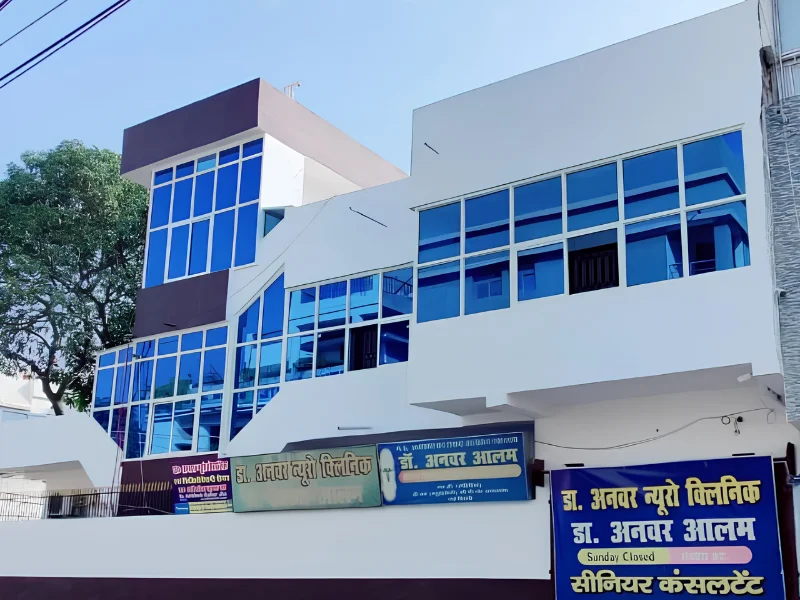
Dr. Anwar Neuro Clinic Address: K2, P.C. Colony, Lane opposite Metro Pillar SP-8/P6, Malahi Pakri Chowk, Kankarbagh, Patna, Bihar 800020
FAQs About Gait Difficulty and Walking Problems Treatment in Patna
A person’s walking pattern can be affected by conditions involving the brain, spinal cord, nerves, muscles, joints, or balance system. Stroke, Parkinson’s disease, neuropathy, spinal disorders, movement disorders, muscle weakness, foot or joint problems, pain, and some medicines can all contribute to walking difficulties. The specific cause needs to be established through individual assessment.
The possibility of recovery varies according to the underlying condition. Some walking problems may improve considerably when the responsible condition can be treated, while others may require ongoing management. Factors such as the cause, severity, duration, and response to treatment can influence the outcome.
A frontal gait disorder may cause difficulty getting started, very small or hesitant steps, reduced foot clearance, instability, and trouble changing direction. A frontal gait disorder may involve difficulty initiating steps, short or hesitant walking, instability, and problems with turning. Depending on the underlying condition, changes in thinking or bladder control may also occur. These features require proper neurological evaluation because several disorders can produce a similar walking pattern.
Management is selected according to the condition responsible for the patient’s altered walking pattern. Depending on the diagnosis, care may involve neurological treatment, medicines, physiotherapy, balance and strengthening exercises, rehabilitation, pain management, or measures to reduce the risk of falls. The management approach is determined after reviewing the patient’s symptoms, examination results, diagnosis, and overall neurological condition.
A neurologist is appropriate when walking difficulty may be connected to the brain, spinal cord, nerves, muscles, balance, or movement control. Depending on the cause, an orthopaedic doctor, physiotherapist, or another specialist may also contribute to the patient’s care.
Gait disturbance can appear as slower walking, shortened steps, shuffling, dragging one foot, difficulty turning, instability, repeated falls, unusual leg movements, or a need for support while walking. The particular pattern can provide useful clinical clues, but determining the actual cause requires a neurological assessment.