

Myasthenia Gravis Treatment in Patna

Myasthenia Gravis Specialist in Patna, Bihar
Dr. Anwar Alam, MBBS, MD (General Medicine), DM (Neurology)
Dr. Anwar Alam has 20 years of clinical experience in neurology and evaluates patients with muscle weakness, drooping eyelids, double vision, swallowing difficulties, speech changes, and other neurological concerns associated with neuromuscular disorders. He also serves as Professor & Head, Neurology, NMCH Patna.
Patients travel to the clinic from Patna and various parts of Bihar, including Sitamarhi, Muzaffarpur, Gaya, Ara, Chhapra, Begusarai, Hajipur, Supaul, Mokama, nearby towns, villages, and areas close to the Nepal border.
On Google, Dr. Anwar Alam has a 4.7-star rating based on 940+ patient reviews, reflecting experiences shared by patients and families who have consulted him for neurological care.
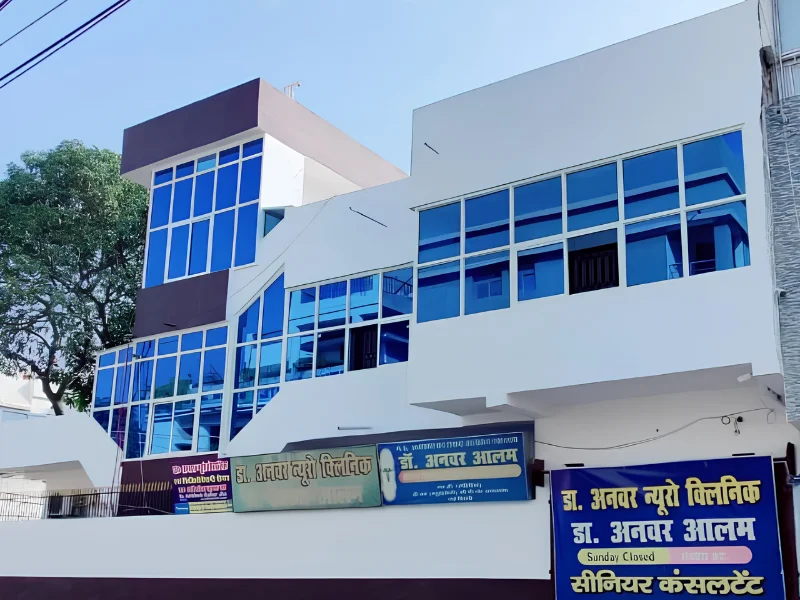
At Dr Anwar Neuro Clinic, Kankarbagh, Patna, patients with suspected myasthenia gravis are evaluated according to their symptoms, medical history, examination findings, and previous reports before further testing or treatment is considered.
Understanding Myasthenia Gravis
Myasthenia gravis is a neuromuscular condition in which communication between nerves and muscles becomes impaired. As a result, muscles may become weak, particularly during repeated or sustained activity. Rest may temporarily improve the weakness, although the pattern varies between patients.
The condition commonly affects the muscles controlling the eyes, face, speech, swallowing, neck, arms, and legs. In more serious cases, the muscles needed for breathing can also become weak. This is why new or rapidly worsening swallowing or breathing difficulty should be treated as a medical concern.
The signs of myasthenia gravis may resemble those seen in several other neurological or medical conditions.
A Myasthenia Gravis neurologist in Patna therefore needs to consider the complete pattern of weakness, how it changes with activity, and the findings from appropriate neurological tests.
Common Symptoms of Myasthenia Gravis
The signs and symptoms of myasthenia gravis can fluctuate and may become more noticeable after repeated use of affected muscles. Common symptoms include:
1. Drooping Eyelids
One or both eyelids may gradually droop, particularly when the person is tired.
2. Double Vision
Weakness of the eye muscles can cause double vision that may vary during the day.
3. Facial Weakness
Some patients may find it difficult to smile normally, close their eyes firmly, or maintain facial expressions.
4. Difficulty Speaking
The voice may become softer, nasal, or less clear after prolonged talking.
5. Trouble Chewing
Chewing may become tiring, particularly during longer meals.
6. Difficulty Swallowing
Weakness of the swallowing muscles can cause difficulty handling food or liquids.
7. Neck, Arm, or Leg Weakness
The person may struggle to hold the head upright, lift the arms, climb stairs, or walk for longer periods.
8. Activity-Related Muscle Fatigue
Weakness may become more noticeable after repeated movement and improve after a period of rest.
Note: Symptoms can vary considerably. New or worsening difficulty swallowing or breathing requires prompt medical attention.
Testimonials & Reviews
What Our Patients Say
Trustindex verifies that the original source of the review is Google. Good doctor and best treatmentPosted on GoogleTrustindex verifies that the original source of the review is Google. वैरी गुड डॉ साहब सर जी हैPosted on GoogleTrustindex verifies that the original source of the review is Google. बहुत-बहुत धन्यवाद सर आपको आपके कारण काफी संतोषजनक महसूस कर रहा हूंPosted on GoogleTrustindex verifies that the original source of the review is Google. Happy to share after 1st visit I'm cured , all staffs are helpful in nature. And I'm fully satisfiedPosted on GoogleTrustindex verifies that the original source of the review is Google. Best doctor in patna ,K 2 P C colony Malahipakari chowk.Posted on GoogleTrustindex verifies that the original source of the review is Google. Sir Paisent satisfactionPosted on GoogleTrustindex verifies that the original source of the review is Google. Dr Anwar Alam sir is a good doctor. I am satisfied with you . His treatment is very good. ThanksPosted on GoogleTrustindex verifies that the original source of the review is Google. I recently met Dr. Anwar Alam in Patna, and I would like to share my positive experience. For the past 6 months, my mother has been under his care, and we are very satisfied with the treatment provided. Her condition has improved significantly, and she is now feeling much more relaxed and comfortable. Dr. Anwar Alam is not only highly skilled but also very cooperative and understanding. He listens patiently and treats his patients with great care and respect. His approach makes us feel like we are consulting a trusted family doctor. We are truly impressed with his treatment and overall behavior. I highly recommend him to anyone seeking quality medical carePosted on GoogleTrustindex verifies that the original source of the review is Google. Dr Anwar Alam is a good doctor in patna. His treatment is very good.I am satisfied with you.All staffs behaviour is very good .Thank you .Posted on GoogleTrustindex verifies that the original source of the review is Google. Best Doctor of neurologist in patna Dr Anwar Alam mai bhut parshan tha apni beti ko leker Dr Anwar Alam ke treatment se hamari beti bikul thik ho gayi.thans Doctor sb.
Myasthenia Gravis: Causes and Risk Factors
Myasthenia gravis is generally related to an abnormal immune response that interferes with communication between nerves and muscles. The exact reason why this immune problem develops is not always known.
1. Autoimmune Reaction : The immune system can produce antibodies that interfere with normal nerve-to-muscle communication.
2. Acetylcholine Receptors : In many patients, antibodies affect acetylcholine receptors, reducing the efficiency of signals reaching the muscles.
3. Other Immune Targets: Some patients have antibodies affecting other proteins involved in neuromuscular communication, while some may not have detectable antibodies.
4. Thymus Abnormalities : Changes involving the thymus gland, including thymic enlargement or a thymoma, can be associated with myasthenia gravis.
5. Genetic Susceptibility : A person’s genetic background may influence their tendency to develop autoimmune disorders, although myasthenia gravis is not usually inherited directly from a parent.
6. Other Autoimmune Conditions : Some people with myasthenia gravis also have another autoimmune condition.
7. Certain Medicines : Some medicines can worsen myasthenia symptoms in susceptible patients. Medication decisions should therefore be discussed with a doctor rather than changed independently.
8. Infections or Physical Stress : Illness, infection, surgery, or significant physical stress can sometimes aggravate existing symptoms.
9. Pregnancy and Hormonal Changes : Hormonal changes and pregnancy can influence symptoms in some women with myasthenia gravis.
How Dr. Anwar Alam Evaluates Myasthenia Gravis
The evaluation begins by understanding exactly how the weakness behaves. Dr. Anwar Alam may ask when symptoms started, which muscles are affected, whether weakness becomes worse after repeated activity, and whether rest provides any improvement.
Particular attention is given to eye symptoms, facial movements, speech, chewing, swallowing, neck strength, arm and leg strength, and any breathing-related complaints. The medical history and current medicines are also reviewed because several factors can influence neuromuscular symptoms.
The neurological examination may include:
— Assessment of eyelid and eye movements
— Facial muscle strength
— Speech and swallowing-related findings
— Neck and limb strength
— Reflexes and coordination
— Observation of weakness following repeated movements
Based on these findings, Dr. Anwar Alam determines whether a myasthenia gravis neurological test or additional investigation may be appropriate.
Diagnostic Tests That May Be Recommended
No single investigation is necessary for every patient. The tests are selected according to the symptoms and clinical findings.
Antibody Testing
Blood tests may look for antibodies associated with myasthenia gravis. Different antibodies may be relevant depending on the clinical situation.
Repetitive Nerve Stimulation
This specialised nerve test examines how muscle responses change when a nerve is repeatedly stimulated and can provide evidence of impaired neuromuscular transmission.
Single-Fibre EMG
In selected cases, single-fibre EMG may be used when more detailed assessment of neuromuscular transmission is required.
Imaging of the Thymus
A CT or MRI may be considered to examine the thymus gland after myasthenia gravis is suspected or diagnosed.
Myasthenia Gravis Treatment in Patna
Treatment is planned according to the severity of weakness, symptoms, test results, age, overall health, and individual response. The aim is to improve muscle function, control symptoms, and reduce the risk of serious complications.
Depending on the patient’s condition, treatment may involve:
— Medicines that improve nerve-muscle communication and help reduce weakness
— Medicines that modify the immune response when appropriate
— Short-term treatments for significant worsening, when clinically necessary
— Thymus-related treatment or surgery in selected patients after specialist assessment
— Supportive rehabilitation for maintaining safe and useful physical function
— Management of associated conditions or medication triggers that may worsen symptoms
Treatment should always be individualised. Patients should not stop, restart, or change prescribed medicines without discussing it with their treating doctor.
What Patients Can Expect From Ongoing Care
Myasthenia gravis can change over time, so follow-up is an important part of management. During subsequent visits, the neurologist may review muscle strength, eye symptoms, speech, swallowing, daily activities, medication response, and any new difficulties.
Patients may also be advised about situations that can worsen weakness and when urgent medical attention is needed. If symptoms affecting swallowing or breathing become significantly worse, immediate medical assessment is important.
Why Timely Evaluation Matters
Myasthenia gravis can resemble other causes of weakness, particularly when the symptoms are mild or fluctuate. Delaying evaluation may leave the underlying problem unidentified and can make it harder to manage changing symptoms appropriately.
A timely neurological assessment can help determine whether the pattern is suggestive of myasthenia gravis, whether a myasthenia gravis diagnosis needs further confirmation, and what investigations or treatment may be appropriate.
Why Choose Dr. Anwar Neuro Clinic for Myasthenia Gravis Treatment in Patna?
When weakness comes and goes, patients may find it difficult to explain exactly what they are experiencing. A careful neurological assessment can help connect the symptoms with their pattern and identify whether further neuromuscular testing is needed.
Patients seeking Myasthenia Gravis Treatment in Patna can benefit from:
— Evaluation by Dr. Anwar Alam, MBBS, MD (General Medicine), DM (Neurology) with 20 years of clinical experience
— Assessment of fluctuating weakness, drooping eyelids, double vision, swallowing difficulty, speech changes, and limb weakness
— Detailed neurological examination
— Review of previous blood tests, EMG/NCS reports, scans, prescriptions, and medical records
— Guidance regarding appropriate myasthenia gravis neurological tests
— A treatment approach planned according to each patient’s individual health needs
— Ongoing neurological follow-up when required
— Conveniently located in Kankarbagh with parking available for cars and two-wheelers
1. Intention
The goal is simple: understand the patient’s pattern of weakness, determine whether it may be related to myasthenia gravis, and guide them toward appropriate testing, treatment, and ongoing neurological care.
2. 20 Years of Experience & 90% Success Rate
Dr. Anwar Alam has 20 years of clinical experience in neurology and evaluates patients with muscle weakness, neuromuscular disorders, seizures, headaches, movement problems, and other neurological concerns.
He is also the Professor & Head of Neurology at NMCH Patna.
3. 4.7-Star Rating Across 939+ Google Reviews
Dr. Anwar Alam has a 4.7-star Google rating based on 940+ patient reviews, reflecting feedback shared by patients and families who have consulted him for neurological care. The reviews represent experiences across a range of neurological concerns and consultations. Patients and families have shared their feedback based on their interactions and care at the clinic. This rating provides an additional reference for people considering neurological consultation in Patna.
Patients Visit From Across Patna and Bihar
Patients visit Dr. Anwar Neuro Clinic for neurological evaluation from different parts of Patna and across Bihar, including Hanuman Nagar, Gardanibagh, Pahari, Kadamkuan, Rajendra Nagar, Boring Road, Sri Krishna Puri (SK Puri), Patliputra Colony, Bailey Road, Raja Bazar, Ashiana-Digha, Phulwari Sharif, Gandhi Maidan, Ashok Rajpath, Rajeev Nagar, Kurji, Gola Road, Mithapur, Jai Prakash Nagar, Lohia Nagar, Sampatchak, Parsa, Ranipur, Anisabad, Beur, Khagaul, Danapur, Sipara, Bihta, Hajipur, Sonepur, and neighbouring areas. Patients from these localities travel to the clinic’s single Kankarbagh location for consultation; there are no other branch clinics.
Dr. Anwar Neuro Clinic Address: K2, P.C. Colony, Lane opposite Metro Pillar SP-8/P6, Malahi Pakri Chowk, Kankarbagh, Patna, Bihar 800020
FAQs About Myasthenia Gravis Treatment in Patna
The neurological signs commonly involve weakness of voluntary muscles that may become more noticeable with repeated activity. Patients may develop drooping eyelids, double vision, facial weakness, difficulty speaking or swallowing, neck weakness, or weakness of the arms and legs. The pattern can fluctuate, which is an important feature considered during neurological evaluation.
The choice of treatment is guided by the patient’s symptoms, disease severity, test findings, and overall health. Medicines that improve communication between nerves and muscles may be used, while immune-modifying treatment may be required for some patients. More intensive treatment or thymus-related surgery may be considered in selected cases. Treatment is customised to the patient’s specific diagnosis, symptoms, and response to care.
Myasthenia gravis is primarily associated with an abnormal immune response that disrupts communication between nerves and muscles. In many patients, the immune system produces antibodies that interfere with proteins involved in this communication. The exact reason why this autoimmune response develops is not always known.
A diagnosis is based on the clinical pattern along with appropriate investigations. Depending on the patient, confirmation may involve antibody blood tests, repetitive nerve stimulation, single-fibre EMG, or other assessments of neuromuscular transmission. No single test is suitable for every patient, so the results need to be interpreted together with the neurological examination.
There is no universal food list that applies to every person with myasthenia gravis. However, swallowing weakness can make certain foods difficult or unsafe for some patients. If swallowing is affected, food texture, meal size, and eating habits may need individual assessment. Patients should discuss persistent swallowing difficulty with their neurologist rather than making major dietary restrictions on their own.