
Neuromuscular Disorders Treatment in Patna, Bihar

Neuromuscular Disorders Specialist in Patna, Bihar
Dr. Anwar Alam, MBBS, MD (General Medicine), DM (Neurology)
Dr. Anwar Alam has 20 years of clinical experience in neurology and evaluates patients with neuromuscular disorders, muscle weakness, peripheral nerve problems, myasthenia gravis, GBS, CIDP, neuropathy, movement difficulties, and other neurological conditions. He also serves as Professor & Head, Neurology, NMCH Patna.
Patients have come from Patna as well as Sitamarhi, Muzaffarpur, Gaya, Ara, Chhapra, Begusarai, Hajipur, Supaul, Mokama, other cities and villages across Bihar, and Nepal border areas.
On Google, Dr. Anwar Alam has a 4.7-star rating based on 940+ patient reviews, reflecting experiences and feedback shared by patients and families who have consulted him for neurological care.
His assessment focuses on understanding when weakness or other symptoms started, which muscles or body parts are affected, whether symptoms worsen with activity, whether sensation is also affected, whether there are problems with swallowing or breathing, and whether symptoms have been progressing or fluctuating.
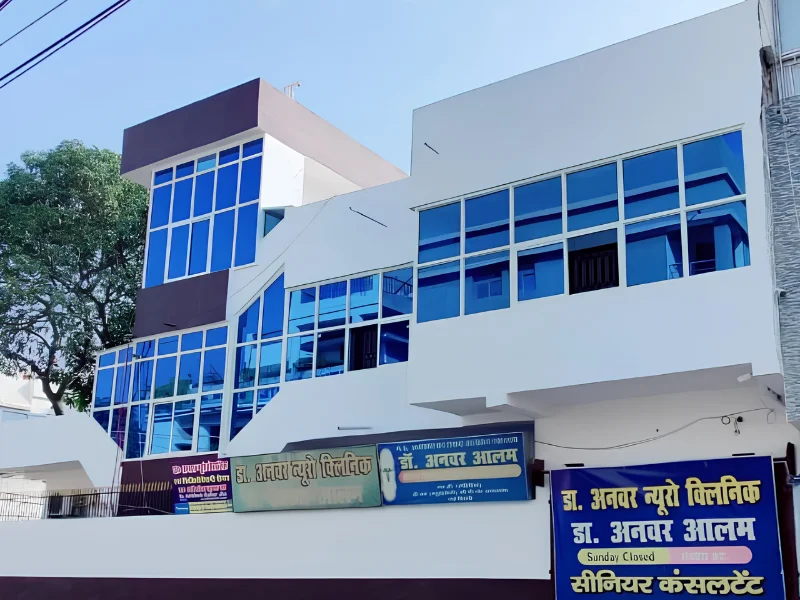
At Dr Anwar Neuro Clinic, Kankarbagh, Patna, patients with suspected neuromuscular disorders are assessed individually, with further investigations and treatment considered according to the clinical findings.
Understanding Neuromuscular Disorders
The term neuromuscular disorder covers a broad group of conditions that interfere with communication between the nervous system and muscles or directly affect nerves or muscles. Because muscles depend on healthy nerve signals to work properly, problems at different points along this pathway can produce similar-looking symptoms.
For example, a peripheral nerve disorder may cause weakness together with numbness or tingling, while a muscle disorder may mainly cause weakness without significant loss of sensation. Myasthenia gravis can cause weakness that tends to worsen after sustained activity and ease when the affected muscles are rested. Conditions such as GBS can cause rapidly developing weakness and require prompt medical assessment.
This difference matters because the same complaint of “weakness” does not necessarily have the same cause. Finding where the problem is occurring helps guide further testing and treatment.
Common Symptoms of Neuromuscular Disorders
Symptoms depend on the specific condition and the part of the neuromuscular system involved. Some people notice weakness first, while others experience sensory symptoms, muscle cramps, difficulty swallowing, or problems with walking.
Common Symptoms of Movement Disorders
The symptoms depend on the type of movement disorder and the parts of the body affected.
1. Muscle Weakness
Weakness may affect the arms, legs, hands, feet, face, or other muscle groups. Everyday tasks may gradually become more difficult than they were before.
2. Difficulty Climbing Stairs or Getting Up
Weakness around the hips and thighs can make climbing stairs, rising from a chair, or getting up from the floor increasingly difficult.
3. Trouble Lifting the Arms
Shoulder and upper-arm weakness may make activities such as combing your hair, reaching overhead, or putting on clothes difficult.
4. Frequent Tripping or Falls
Reduced strength in the legs or feet can make walking difficult and may lead to more frequent stumbling or falls.
5. Muscle Wasting
Some neuromuscular conditions can cause muscles to become visibly smaller over time because of loss of nerve supply or muscle disease.
6. Numbness or Tingling
When peripheral nerves are affected, patients may experience pins-and-needles, burning, reduced sensation, or other unusual feelings.
7. Muscle Cramps or Twitching
Repeated cramps, fasciculations, or other unusual muscle activity can occur in some neurological and neuromuscular conditions.
8. Fatigue With Repeated Activity
Some neuromuscular conditions cause muscle weakness that increases with repeated activity and may ease after taking a period of rest.
9. Difficulty Speaking or Swallowing
Some neuromuscular conditions can affect the muscles responsible for speech, chewing, or swallowing.
10. Breathing Difficulty
In certain serious neuromuscular conditions, the muscles required for breathing can become weak. New or worsening breathing difficulty requires prompt medical attention.
Note: Muscle weakness is different from simply feeling tired. Persistent or progressive difficulty performing movements, especially when accompanied by muscle wasting, falls, swallowing problems, numbness, or breathing difficulty, should be evaluated by a neurologist.
Testimonials & Reviews
What Our Patients Say
Trustindex verifies that the original source of the review is Google. Good doctor and best treatmentPosted on GoogleTrustindex verifies that the original source of the review is Google. वैरी गुड डॉ साहब सर जी हैPosted on GoogleTrustindex verifies that the original source of the review is Google. बहुत-बहुत धन्यवाद सर आपको आपके कारण काफी संतोषजनक महसूस कर रहा हूंPosted on GoogleTrustindex verifies that the original source of the review is Google. Happy to share after 1st visit I'm cured , all staffs are helpful in nature. And I'm fully satisfiedPosted on GoogleTrustindex verifies that the original source of the review is Google. Best doctor in patna ,K 2 P C colony Malahipakari chowk.Posted on GoogleTrustindex verifies that the original source of the review is Google. Sir Paisent satisfactionPosted on GoogleTrustindex verifies that the original source of the review is Google. Dr Anwar Alam sir is a good doctor. I am satisfied with you . His treatment is very good. ThanksPosted on GoogleTrustindex verifies that the original source of the review is Google. I recently met Dr. Anwar Alam in Patna, and I would like to share my positive experience. For the past 6 months, my mother has been under his care, and we are very satisfied with the treatment provided. Her condition has improved significantly, and she is now feeling much more relaxed and comfortable. Dr. Anwar Alam is not only highly skilled but also very cooperative and understanding. He listens patiently and treats his patients with great care and respect. His approach makes us feel like we are consulting a trusted family doctor. We are truly impressed with his treatment and overall behavior. I highly recommend him to anyone seeking quality medical carePosted on GoogleTrustindex verifies that the original source of the review is Google. Dr Anwar Alam is a good doctor in patna. His treatment is very good.I am satisfied with you.All staffs behaviour is very good .Thank you .Posted on GoogleTrustindex verifies that the original source of the review is Google. Best Doctor of neurologist in patna Dr Anwar Alam mai bhut parshan tha apni beti ko leker Dr Anwar Alam ke treatment se hamari beti bikul thik ho gayi.thans Doctor sb.
Causes and Risk Factors
Neuromuscular disorders can develop for very different reasons. Some are inherited, while others appear later because of autoimmune disease, infection, inflammation, metabolic problems, medicines, or damage to nerves or muscles.
Possible causes include:
— Inherited disorders: Conditions such as certain muscular dystrophies and hereditary neuropathies can result from genetic changes.
— Autoimmune conditions: Disorders such as myasthenia gravis, inflammatory myopathies, and CIDP occur when the immune system affects components of the nervous or muscular system.
— Infections: Some infections can trigger nerve or muscle problems. GBS, for example, can develop following an infection.
— Metabolic or nutritional problems: Certain thyroid disorders, vitamin deficiencies, electrolyte abnormalities, and other metabolic conditions can contribute to weakness or nerve symptoms.
— Medication-related problems: Some medicines can affect nerves or muscles and may contribute to weakness or other symptoms.
— Muscle diseases: Myopathies and inflammatory muscle conditions can directly affect muscle fibres.
— Motor neuron disorders: Conditions affecting motor nerve cells can progressively interfere with muscle control.
The presence of one possible risk factor does not establish the diagnosis. The pattern and progression of symptoms need to be assessed clinically.
How Dr. Anwar Alam Evaluates Neuromuscular Disorders
When a patient reports weakness, the most important question is often where the weakness is coming from.
Dr. Anwar Alam begins by understanding the patient’s history and how the problem has changed over time. He may ask whether the weakness started suddenly or gradually, whether it affects one side or both sides, and whether it is more noticeable after physical activity.
The evaluation may include questions about:
— Difficulty climbing stairs or getting up from a chair
— Trouble lifting the arms or holding objects
— Frequent falls or changes in walking
— Muscle cramps, twitching, or wasting
— Numbness, tingling, or altered sensation
— Difficulty speaking, chewing, or swallowing
— Fatigue that increases with repeated activity
— Breathing difficulty
— Previous infections or illnesses
— Any history of similar muscle or nerve conditions in the family
— Medicines currently being taken and treatments tried in the past
The neurological examination may assess muscle strength, muscle bulk, tone, reflexes, sensation, coordination, eye and facial movements, speech, swallowing, and walking.
This helps the neurologist determine whether the pattern is more suggestive of a muscle disorder, peripheral nerve problem, neuromuscular junction disorder, motor neuron disease, or another neurological condition.
Diagnostic Tests for Neuromuscular Disorders
There is no single test that can diagnose every neuromuscular disorder. Testing is selected according to the symptoms and findings during examination.
EMG and Nerve Conduction Study
EMG and NCS are important investigations when a nerve or muscle disorder is suspected.
Nerve conduction studies assess how electrical signals travel through peripheral nerves, while EMG examines electrical activity within muscles. Together, they can provide useful information about whether symptoms are more consistent with nerve, muscle, or neuromuscular-junction involvement.
Blood Tests
Blood tests may be recommended to look for muscle enzyme abnormalities, thyroid problems, nutritional deficiencies, electrolyte disturbances, inflammation, autoimmune markers, or other conditions that can contribute to weakness.
MRI
MRI may be considered when the doctor needs to investigate the brain, spinal cord, nerve roots, or muscles and rule out another condition that could be producing similar symptoms.
Antibody Tests
In selected patients, specific antibody testing may help evaluate autoimmune neuromuscular disorders such as myasthenia gravis or certain inflammatory conditions.
Genetic Testing
Genetic testing may be considered when the history, age of onset, examination, or family pattern raises suspicion of an inherited neuromuscular disorder.
Muscle or Nerve Biopsy
A biopsy is not required for everyone. In selected cases where the diagnosis remains uncertain, examining a small sample of muscle or nerve tissue may provide additional information.
Neuromuscular Disorders Treatment in Patna
Treatment depends entirely on the specific neuromuscular disorder. A person with autoimmune disease may need a very different approach from someone with an inherited muscle disorder or peripheral nerve condition.
Depending on the diagnosis, management may include:
— Medicines: Treatment may target the underlying disease, reduce inflammation or immune activity, improve nerve-muscle communication, or manage specific symptoms.
— Physiotherapy: Appropriate exercises can help maintain mobility, flexibility, strength, and functional ability without placing unnecessary strain on weak muscles.
— Occupational therapy: Patients with difficulty performing daily activities may benefit from practical methods and adaptive strategies.
— Speech and swallowing support: This may be required when the muscles involved in communication, chewing, or swallowing are affected.
— Nutritional support: Some patients may need dietary guidance, particularly when swallowing difficulty, weight loss, or a specific metabolic condition is present.
— Respiratory assessment: Certain neuromuscular disorders can weaken breathing muscles, making respiratory monitoring important in appropriate patients.
— Treatment of the underlying cause: Where weakness results from an identifiable medical, nutritional, autoimmune, infectious, or medication-related problem, addressing that cause becomes an important part of management.
The treatment plan is therefore based on the diagnosis, severity, rate of progression, functional limitations, and overall health of the patient.
When Neuromuscular Weakness Needs Prompt Attention
Not every episode of weakness is an emergency, but certain symptoms should not be left for a routine appointment.
Seek prompt medical attention if weakness develops rapidly or is accompanied by:
— Difficulty breathing
— Trouble swallowing or repeated choking
— Weakness in the arms or legs that is becoming noticeably worse over a short period
— New or increasing difficulty standing or walking independently
— Severe weakness following an infection
— Sudden weakness or loss of strength in the face, arm, or leg, especially when it affects one side of the body
Weakness that develops quickly or continues to worsen should be assessed promptly, as it can sometimes indicate a serious neurological condition that requires urgent medical care.
What Patients Can Expect From Ongoing Care
Some neuromuscular disorders improve with appropriate treatment, while others require long-term monitoring because symptoms can change over time. The timing and nature of follow-up care are tailored to the patient’s condition and treatment needs.
During ongoing care, the neurologist may monitor:
— Muscle strength and function
— Walking and mobility
— Muscle wasting or cramps
— Numbness and other sensory symptoms
— Speech and swallowing
— Medication response and side effects
— Need for physiotherapy or other rehabilitation
For progressive conditions, the aim is to identify changes early and provide appropriate support to preserve independence and daily function for as long as possible.
Why Timely Diagnosis Matters
Persistent weakness is sometimes mistaken for tiredness, ageing, lack of exercise, or general body weakness. If the problem continues or gradually affects everyday activities, the underlying cause deserves attention.
A proper neurological assessment can help distinguish between muscle disease, nerve disease, neuromuscular-junction disorders, motor neuron disorders, and other causes of weakness.
Getting the diagnosis right also matters because treatment differs considerably between these conditions. A medicine that is useful for one disorder may not be appropriate for another.
Why Choose Dr. Anwar Neuro Clinic for Neuromuscular Disorders Treatment in Patna?
Neuromuscular symptoms can be confusing because weakness, fatigue, cramps, numbness, and difficulty walking may have several possible causes. At Dr Anwar Neuro Clinic, the evaluation focuses on understanding the pattern of symptoms and identifying where the problem may be occurring before planning further management.
Patients seeking neuromuscular disorders treatment in Patna can benefit from:
— Consultation with Dr. Anwar Alam, MBBS, MD (General Medicine), DM (Neurology), with 20 years of clinical experience
— Evaluation of unexplained muscle weakness, wasting, cramps, twitching, and walking difficulties
— Assessment of peripheral nerve and neuromuscular-junction symptoms
— Neurological examination of strength, reflexes, sensation, coordination, and gait
— Review of previous EMG, NCS, MRI, blood tests, and medical reports
— Guidance regarding further investigations when clinically appropriate
— Individualised treatment planning according to the suspected or confirmed condition
— Follow-up for persistent, progressive, or changing neurological symptoms
— Conveniently located in Kankarbagh with parking available for cars and two-wheelers
1. Intention
The intention is simple: help patients understand why unexplained weakness or muscle-related symptoms are occurring, identify the part of the neuromuscular system that may be affected, and guide them toward appropriate evaluation and treatment.
2. 20 Years of Neurology Experience
Dr. Anwar Alam has 20 years of clinical experience in neurology and evaluates patients with muscle weakness, peripheral nerve disorders, myasthenia gravis, GBS, CIDP, neuropathy, muscle diseases, and other neuromuscular conditions.
His assessment looks beyond the complaint of “weakness” to understand how symptoms began, how they are progressing, and whether the pattern points toward a nerve, muscle, or neuromuscular-junction problem.
3. 4.7-Star Rating Across 940+ Google Reviews
With a 4.7-star Google rating based on 940+ patient reviews, Dr. Anwar Alam has received extensive feedback from patients and families who have consulted him for neurological care, including concerns related to vertigo and balance disorders.
Patients Visit From Across Patna and Bihar
Patients visit Dr. Anwar Neuro Clinic for neuromuscular disorders, muscle weakness, neuropathy, myasthenia gravis, GBS, CIDP, muscle wasting, cramps, twitching, and walking difficulties from different parts of Patna and across Bihar, including Hanuman Nagar, Gardanibagh, Pahari, Kadamkuan, Rajendra Nagar, Boring Road, Sri Krishna Puri (SK Puri), Patliputra Colony, Bailey Road, Raja Bazar, Ashiana-Digha, Phulwari Sharif, Gandhi Maidan, Ashok Rajpath, Rajeev Nagar, Kurji, Gola Road, Mithapur, Jai Prakash Nagar, Lohia Nagar, Sampatchak, Parsa, Ranipur, Anisabad, Beur, Khagaul, Danapur, Sipara, Bihta, Hajipur, Sonepur, and neighbouring areas. Patients from these locations travel to the clinic’s single Kankarbagh location for consultation; there are no other branch clinics.
Dr. Anwar Neuro Clinic Address: K2, P.C. Colony, Lane opposite Metro Pillar SP-8/P6, Malahi Pakri Chowk, Kankarbagh, Patna, Bihar 800020
FAQs About Movement Disorders Treatment in Patna
A neurologist can evaluate unexplained tremor, stiffness, slow movements, involuntary movements, walking changes and balance problems. Dr. Anwar Alam evaluates movement-related neurological symptoms at Dr Anwar Neuro Clinic, Kankarbagh, Patna.
Many movement disorders can be managed, although treatment depends on the specific diagnosis. Options may include medicines, physiotherapy, occupational or speech therapy, targeted botulinum toxin treatment for selected conditions and, in certain cases, specialist procedures.
Consider an evaluation when the movement is new, repeatedly occurring, becoming more noticeable, interfering with work or daily activities, or accompanied by stiffness, walking difficulty, balance problems, weakness or other neurological symptoms.
No. Tremor has several possible causes. Essential tremor, Parkinson’s disease, certain medicines and other neurological or medical conditions can produce shaking. The timing and characteristics of the tremor, together with the neurological examination, help determine the likely cause.
Testing depends on the suspected cause. Depending on the situation, a doctor may recommend blood tests, MRI or other imaging, EMG, genetic testing or a DAT scan. Many movement disorders can be assessed primarily through history and neurological examination.
Yes. Some medicines can contribute to tremor, parkinsonism or other abnormal movements. Tell your neurologist about all prescription medicines, over-the-counter medicines and supplements you are taking so they can be considered during the assessment.