

Multiple Sclerosis and Demyelinating Disorders Treatment in Patna, Bihar

Multiple Sclerosis and Demyelinating Disorders Specialist in Patna, Bihar
Dr. Anwar Alam, MBBS, MD (General Medicine), DM (Neurology)
Dr. Anwar Alam has 20 years of clinical experience in neurology and has evaluated and treated patients with multiple sclerosis, optic neuritis, recurrent numbness or weakness, balance problems, walking difficulty, and other demyelinating neurological conditions. Patients have come from Patna as well as Sitamarhi, Muzaffarpur, Gaya, Ara, Chhapra, Begusarai, Hajipur, Supaul, Mokama, other cities and villages across Bihar, and Nepal border areas.
On Google, Dr. Anwar Alam has a 4.7-star rating based on 940+ patient reviews, reflecting the experiences and feedback shared by patients and families who have consulted him for neurological care. His approach focuses on understanding when the neurological symptoms started, whether they improved and returned, which parts of the body are affected, whether there are vision changes, numbness, weakness, balance or walking problems, and what previous MRI or test findings show before planning further evaluation and treatment.
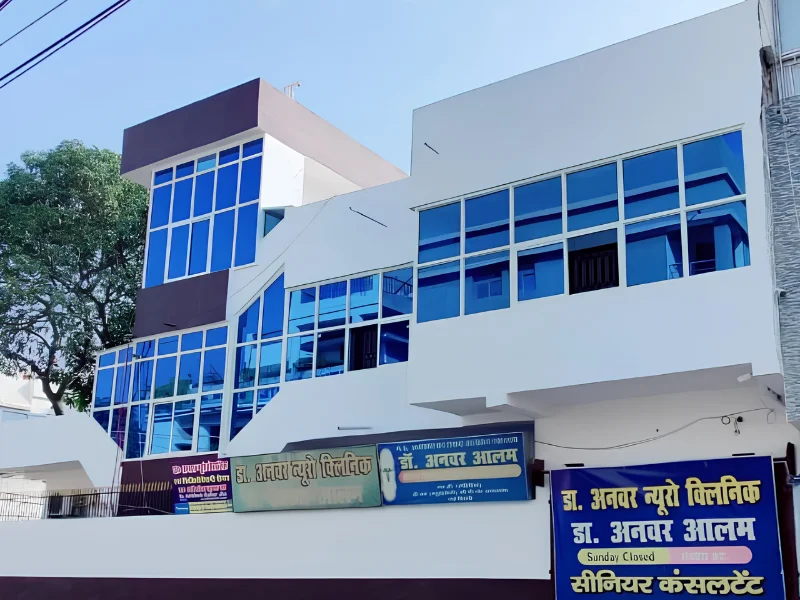
At Dr Anwar Neuro Clinic, Kankarbagh, Patna, patients with suspected multiple sclerosis and demyelinating disorders are assessed according to their individual symptoms and clinical findings. When appropriate, MRI review and other investigations may be considered to help distinguish MS from related demyelinating conditions and guide long-term neurological care.
Understanding Multiple Sclerosis and Demyelinating Disorders
Multiple sclerosis, or MS, is a neurological condition in which the immune system damages myelin, the protective covering around nerve fibres in the brain and spinal cord. When myelin is affected, nerve signals may not travel normally, which can lead to symptoms such as blurred vision, numbness, weakness, poor balance, stiffness, or difficulty walking.
MS is one type of demyelinating disorder, but it is not the only one. Other conditions, including optic neuritis, neuromyelitis optica spectrum disorder (NMOSD), and MOG antibody-associated disease (MOGAD), can also damage myelin and produce similar neurological symptoms. Some people experience symptoms in episodes that improve and return, while others may have more persistent problems.
How Dr. Anwar Alam Evaluates Suspected Multiple Sclerosis
When you visit with symptoms that may suggest MS or another demyelinating disorder, the first step is to understand the complete history of the problem.
Dr. Anwar Alam may ask:
1. When did the first symptom begin?
2. How long did it last?
3. Did it improve completely or only partially?
4. Have similar symptoms occurred before?
5. Was there any loss of vision or pain while moving the eye?
6. Did numbness or weakness affect one side or both sides?
7. Have balance, coordination, or walking changed?
8. Are there bladder symptoms or unusual stiffness?
Note: A neurological examination may then assess vision, eye movements, strength, sensation, reflexes, coordination, balance, and walking.
The purpose is to determine whether the symptoms fit a demyelinating disorder and whether further testing is required.
Testimonials & Reviews
What Our Patients Say
Trustindex verifies that the original source of the review is Google. Good doctor and best treatmentPosted on GoogleTrustindex verifies that the original source of the review is Google. वैरी गुड डॉ साहब सर जी हैPosted on GoogleTrustindex verifies that the original source of the review is Google. बहुत-बहुत धन्यवाद सर आपको आपके कारण काफी संतोषजनक महसूस कर रहा हूंPosted on GoogleTrustindex verifies that the original source of the review is Google. Happy to share after 1st visit I'm cured , all staffs are helpful in nature. And I'm fully satisfiedPosted on GoogleTrustindex verifies that the original source of the review is Google. Best doctor in patna ,K 2 P C colony Malahipakari chowk.Posted on GoogleTrustindex verifies that the original source of the review is Google. Sir Paisent satisfactionPosted on GoogleTrustindex verifies that the original source of the review is Google. Dr Anwar Alam sir is a good doctor. I am satisfied with you . His treatment is very good. ThanksPosted on GoogleTrustindex verifies that the original source of the review is Google. I recently met Dr. Anwar Alam in Patna, and I would like to share my positive experience. For the past 6 months, my mother has been under his care, and we are very satisfied with the treatment provided. Her condition has improved significantly, and she is now feeling much more relaxed and comfortable. Dr. Anwar Alam is not only highly skilled but also very cooperative and understanding. He listens patiently and treats his patients with great care and respect. His approach makes us feel like we are consulting a trusted family doctor. We are truly impressed with his treatment and overall behavior. I highly recommend him to anyone seeking quality medical carePosted on GoogleTrustindex verifies that the original source of the review is Google. Dr Anwar Alam is a good doctor in patna. His treatment is very good.I am satisfied with you.All staffs behaviour is very good .Thank you .Posted on GoogleTrustindex verifies that the original source of the review is Google. Best Doctor of neurologist in patna Dr Anwar Alam mai bhut parshan tha apni beti ko leker Dr Anwar Alam ke treatment se hamari beti bikul thik ho gayi.thans Doctor sb.
What Symptoms Can Multiple Sclerosis Cause?
MS symptoms vary because different parts of the brain, spinal cord, or optic nerves may be affected. One patient may initially notice a vision problem, while another may develop numbness, weakness, or difficulty maintaining balance.
Common symptoms may include:
—Blurred or reduced vision, especially in one eye
— Pain while moving the eye
— Numbness or tingling in the face, arm, leg, or another area
— Weakness or heaviness in one or more limbs
— Poor balance or unsteady walking
— Muscle stiffness or spasms
— Double vision
— Difficulty with coordination
— Unusual fatigue
— Bladder-related problems in some patients
These symptoms do not automatically mean that a person has MS. Several neurological and non-neurological conditions can cause similar complaints, so the pattern of symptoms and investigation findings needs to be considered together.
Why Do Symptoms Sometimes Come and Go?
In some demyelinating disorders, inflammation may temporarily affect a particular nerve pathway. This can cause symptoms such as weakness, numbness, or vision difficulty, which may later improve.
A patient may then develop another neurological symptom weeks, months, or even years later. This pattern can be important when evaluating suspected MS.
However, recurring symptoms can also occur in migraine, nerve compression, vitamin deficiencies, neuropathy, and several other neurological conditions. That is why diagnosis should not be based on symptoms alone.
How Dr. Anwar Alam Evaluates Suspected Multiple Sclerosis
When you visit with symptoms that may suggest MS or another demyelinating disorder, the first step is to understand the complete history of the problem.
Dr. Anwar Alam may ask:
When did the first symptom begin?
How long did it last?
Did it improve completely or only partially?
Have similar symptoms occurred before?
Was there any loss of vision or pain while moving the eye?
Did numbness or weakness affect one side or both sides?
Have balance, coordination, or walking changed?
Are there bladder symptoms or unusual stiffness?
Have previous MRI scans or neurological tests been performed?
A neurological examination may then assess vision, eye movements, strength, sensation, reflexes, coordination, balance, and walking.
The purpose is to determine whether the symptoms fit a demyelinating disorder and whether further testing is required.
MRI and Other Tests for Multiple Sclerosis
There is no single test that proves MS in every patient. Diagnosis is usually based on the combination of symptoms, examination findings, MRI patterns, and additional investigations when needed.
— MRI of the Brain and Spine
MRI is one of the most useful investigations when MS is suspected. It can show areas where inflammation or demyelination may have affected the brain or spinal cord.
However, every white spot on MRI does not mean multiple sclerosis. MRI findings must be interpreted in the context of the patient’s symptoms and neurological examination.
— Blood Tests
Blood investigations may be advised to rule out other conditions that can resemble MS or another demyelinating disorder.
— Lumbar Puncture
In selected patients, cerebrospinal fluid testing may provide additional information when the diagnosis is still uncertain after examination and imaging.
— Antibody and Other Specialized Tests
When conditions such as NMOSD or MOGAD are suspected, specific antibody tests may sometimes be recommended.
Not every patient needs all of these investigations. Tests should be selected according to the clinical situation.
Other Demyelinating Disorders That Can Resemble MS
— Neuromyelitis Optica Spectrum Disorder
NMOSD often affects the optic nerves and spinal cord. It can cause significant vision problems, weakness, numbness, or walking difficulty. Although some symptoms overlap with MS, it is a different condition and may require a different treatment approach.
— MOG Antibody-Associated Disease
MOGAD can affect the optic nerves, spinal cord, brain, or a combination of these areas. Its symptoms may sometimes resemble MS or NMOSD, so accurate diagnosis is important.
— Optic Neuritis
Optic neuritis may occur independently or as part of another demyelinating condition. Further evaluation may be needed when there are other neurological symptoms or particular MRI findings.
Multiple Sclerosis Treatment in Patna
Treatment depends on the confirmed diagnosis, disease activity, MRI findings, previous episodes, severity of symptoms, and the patient’s overall health.
Treatment may involve:
Management of an acute relapse when required
Disease-modifying treatment for suitable patients with confirmed MS
Treatment for symptoms such as stiffness, pain, or bladder problems
Physiotherapy and rehabilitation
Balance and walking support
Regular neurological follow-up
Repeat MRI monitoring when clinically appropriate
The treatment used for MS may not be suitable for every other demyelinating disorder. This is one reason why distinguishing between MS, NMOSD, MOGAD, and other conditions is important before planning long-term treatment.
What Happens During an MS Relapse?
An MS relapse generally involves a new neurological symptom or a clear worsening of an older symptom that lasts for a meaningful period and is not better explained by fever, infection, or another temporary problem.
A relapse may cause new weakness, numbness, visual difficulty, balance problems, or other neurological changes.
Not every temporary worsening is a relapse. If symptoms change noticeably, a neurological assessment can help determine what is happening and whether treatment is required.
Long-Term Care for Multiple Sclerosis
Multiple sclerosis often requires ongoing follow-up even when symptoms have improved. Some patients remain stable for long periods, while others may experience new neurological episodes.
During follow-up, the neurologist may review:
New or recurring symptoms
Walking and balance
Vision changes
Treatment response
Medicine-related side effects
MRI changes
Need for rehabilitation or additional support
Long-term treatment decisions should be based on the patient’s overall disease activity rather than a single symptom or MRI report.
Why Timely Diagnosis Matters
Repeated weakness, numbness, vision changes, or difficulty walking should not be ignored when the cause is unclear.
A timely neurological evaluation can help determine whether the problem is MS, another demyelinating disorder, or a different neurological condition. It can also help avoid unnecessary treatment based only on symptoms or an MRI finding that may have another explanation.
Earlier diagnosis may allow appropriate treatment and monitoring to begin before further neurological problems develop.
Why Choose Dr Anwar Neuro Clinic for Multiple Sclerosis Treatment in Patna?
Patients seeking evaluation for multiple sclerosis and demyelinating disorders in Patna can receive neurological assessment and ongoing care based on their individual condition.
At Dr Anwar Neuro Clinic, the focus includes:
— Consultation with Dr. Anwar Alam, MBBS, MD, DM (Neurology), with 20 years of clinical experience
— Evaluation of recurring weakness, numbness, vision changes, and balance problems
— Review of previous MRI scans and neurological reports
— Guidance on additional investigations when required
— Individualised treatment planning
— Follow-up for long-term neurological care
— Assessment of possible MS and related demyelinating disorders
— Easily accessible Kankarbagh location with parking for cars and two-wheelers.
The aim is to help patients understand what may be causing their symptoms and provide a clear plan for investigation, treatment, and follow-up.
1. Intention
The intention is simple: help each patient understand what is happening with their demyelinating disorder and guide them toward a realistic, well-explained plan of care.
2. 20 Years of Experience & 90% Success Rate
He has treated over 1,00,000 patients, and while individual results always depend on the specific case, it reports a 90% success rate across the conditions
3. 4.7-Star Rating Across 939+ Google Reviews
As one of the top-rated neurologists in Patna for headache and migraine care, he brings this same depth of experience to every consultation.
Patients Visit Our Multiple Sclerosis Treatment Clinic From Across Patna and Bihar
Patients visit Dr. Anwar Neuro Clinic for multiple sclerosis and demyelinating disorder evaluation from different parts of Patna and across Bihar, including Hanuman Nagar, Gardanibagh, Pahari, Kadamkuan, Rajendra Nagar, Boring Road, Sri Krishna Puri, Patliputra Colony, Bailey Road, Raja Bazar, Ashiana-Digha, Phulwari Sharif, Gandhi Maidan, Ashok Rajpath, Rajeev Nagar, Kurji, Gola Road, Mithapur, Jai Prakash Nagar, Lohia Nagar, Sampatchak, Parsa, Ranipur, Anisabad, Beur, Khagaul, Danapur, Sipara, Bihta, Hajipur, Sonepur, and neighbouring areas. Patients from these locations travel to the clinic’s single Kankarbagh branch for consultation; there are no other branch clinics.
Dr. Anwar Neuro Clinic Address: K2, P.C. Colony, Lane opposite Metro Pillar SP-8/P6, Malahi Pakri Chowk, Kankarbagh, Patna, Bihar 800020
FAQs About Multiple Sclerosis and Demyelinating Disorders
A neurologist is the appropriate specialist to consult if you have suspected multiple sclerosis, optic neuritis, recurrent numbness, weakness, balance problems, or other unexplained neurological symptoms. Dr. Anwar Alam evaluates patients with suspected MS and related demyelinating conditions at Dr Anwar Neuro Clinic, Kankarbagh.
MS can affect people differently. Some patients have mild or occasional symptoms, while others may experience repeated relapses or increasing difficulty with movement, vision, or other neurological functions. Regular follow-up and appropriate treatment are important.
No. Optic neuritis may occur with multiple sclerosis, but it can also happen with NMOSD, MOGAD, or independently. Further neurological evaluation helps clarify the cause.
At present, there is no complete cure for multiple sclerosis, but treatment can help reduce disease activity, manage relapses and symptoms, and support long-term neurological function. Treatment needs vary from one patient to another.
MRI of the brain and sometimes the spinal cord is commonly used. Depending on the clinical findings, blood tests, lumbar puncture, evoked potential tests, or specific antibody tests may also be considered.
Multiple sclerosis is one type of demyelinating disorder. The broader term includes several conditions in which myelin is damaged. Because these disorders can behave differently and require different treatment, identifying the correct diagnosis is important.