

Headache is one of the most common problems people experience, but not every headache is the same. Some headaches are mild and temporary, while others keep coming back, disturb sleep, affect work, and make daily life difficult. Many patients also confuse migraine with a normal headache because both can cause head pain. However, migraine is not just a strong headache. It is a neurological condition that can affect the way the brain responds to light, sound, smell, sleep changes, stress, and other triggers.
At Dr. Anwar Neuro Clinic, we often see patients who have been taking painkillers repeatedly for headaches without knowing the actual reason behind the pain. Understanding the difference between migraine and a normal headache can help you decide when home care is enough and when medical evaluation is needed.
What Is a Normal Headache?
A normal headache usually means occasional head pain that happens due to common triggers such as stress, lack of sleep, dehydration, long screen use, skipped meals, or tiredness. These headaches are often short-lasting and improve with rest, hydration, proper sleep, or basic treatment.
The most common type is a tension headache. It usually feels like pressure, heaviness, or tightness around the head. Some people describe it as a band-like feeling. The pain is generally mild to moderate and does not usually come with nausea, vomiting, or sensitivity to light and sound.
A normal headache may occur after:
- Poor sleep or late-night work
- Long hours on the mobile or computer
- Stress, anxiety, or mental tiredness
- Skipping meals
- Dehydration
- Sinus congestion or cold
- Neck strain or poor posture
Occasional headaches are not always serious. But if the headache is frequent, severe, changing in pattern, or affecting your routine, it should not be ignored.
What is a migraine?
Migraine is a recurring neurological conditions in which the brain becomes overly sensitive to certain triggers. It can cause moderate to severe headaches, but the pain is only one part of the condition. Migraines may also cause nausea, vomiting, dizziness, blurred vision, tiredness, difficulty concentrating, and sensitivity to light or sound.
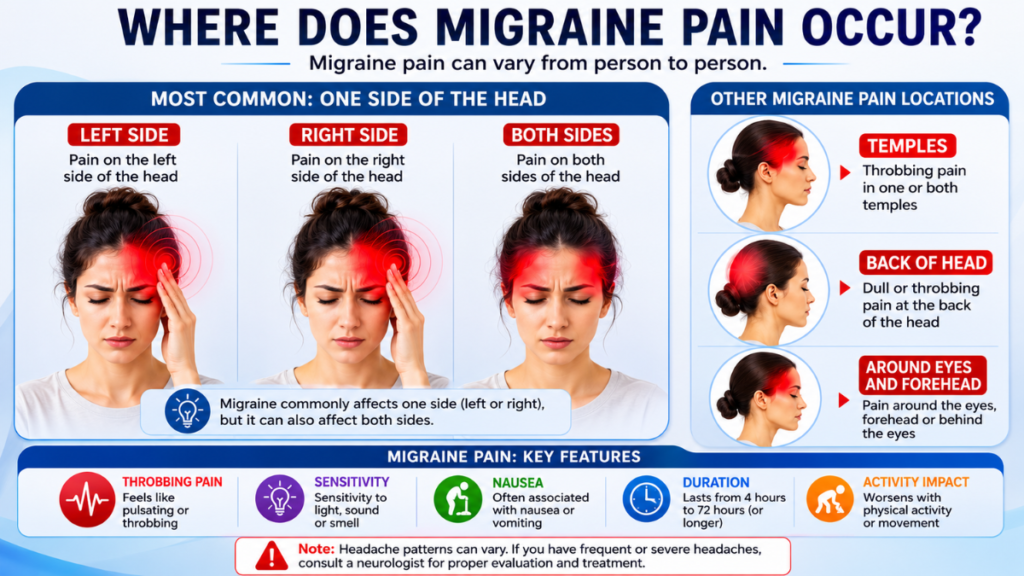
Migraine pain is often throbbing or pulsating. It may affect one side of the head, but it can also occur on both sides. Some patients feel pain around the forehead, eyes, temples, or back of the head. The episode may last for a few hours or continue for one to three days.
Common migraine symptoms include:
- Throbbing or pulsating headache
- Pain that worsens with movement
- Sensitivity to light
- Sensitivity to sound
- Nausea or vomiting
- Dizziness or imbalance
- Blurred vision or visual disturbance
- Fatigue before or after the attack
- Difficulty focusing during the episode
Some people also experience warning signs before migraine pain starts. This may include mood changes, food cravings, yawning, neck stiffness, or visual symptoms like flashes of light or zigzag lines. This is why migraine headache treatment should focus not only on pain relief, but also on identifying the pattern, triggers, and frequency of attacks.
Migraine or Normal Headache: Main Differences
The biggest difference between migraine and a normal headache is the overall pattern. A normal headache is usually limited to head pain or pressure, while migraine often affects the whole body and nervous system.
In a tension-type headache, a person may continue routine work, although with discomfort. In migraine, daily activities often become difficult. Many patients prefer to lie down in a dark, quiet room because light, sound, movement, or smell can worsen the symptoms.
A normal headache usually improves within a few hours. Migraines may last longer and return again and again if triggers are not controlled or proper treatment is not started.
Key differences include:
- Normal headaches usually cause dull pressure; migraine often causes throbbing pain.
- A routine headache often stays at a tolerable level, while migraine pain is usually more severe and more disruptive, making it harder to work, study, travel, or continue normal activities.
- A normal headache may not disturb routine much; migraine can affect work, study, sleep, and travel.
- Normal headaches usually have fewer associated symptoms; migraine may come with nausea, vomiting, light sensitivity, sound sensitivity, or dizziness.
- Normal headache often improves with rest; migraine may need specific evaluation and treatment.
This difference matters because frequent migraine attacks should not be managed only with repeated painkiller use. Overuse of pain medicines can sometimes make headaches more frequent and harder to control.
What Can Trigger Migraines?
Migraine triggers are not the same for every patient. One person may get migraines after poor sleep, while another may get them after stress, fasting, strong sunlight, or certain foods. Many patients do not notice their triggers until they start tracking their headache pattern.
Common migraine triggers include poor sleep, irregular meals, dehydration, stress, hormonal changes, bright light, loud sound, strong smell, excess screen exposure, weather changes, and overuse of caffeine. In some patients, migraine may worsen during exams, office pressure, travel, or long working hours.
Women may notice migraines around their menstrual cycles due to hormonal changes. Some patients also report attacks after skipping breakfast, working late at night, or spending long hours in sunlight.
You may start observing:
- What time does the headache begin
- Whether it follows poor sleep or skipped meals
- Whether light or sound worsens the pain
- How often are painkillers needed
- Whether nausea or vomiting happens with the headache
- Whether the headache affects work or sleep
This information helps a doctor understand whether the problem is migraine, tension headache, sinus-related headache, medication-overuse headache, or another neurological concern.
Are Frequent Headaches a Sign of Chronic Migraine?
Frequent headaches should never be treated as normal, especially when they keep returning month after month. Chronic migraine is usually considered when a person has headaches on many days of the month, with migraine-like symptoms on several of those days.
Patients often search for migraine treatment chronic when the headache is no longer occasional and starts affecting work, studies, sleep, travel, or family life. This stage needs proper evaluation because repeated use of painkillers can sometimes increase headache frequency instead of solving the problem.
You should consult a doctor if:
- Headache occurs repeatedly every week
- Painkillers are needed very often
- A headache wakes you from sleep
- Migraine affects your work or study
- Headache pattern is changing
- Pain is associated with vomiting, weakness, vision change, confusion, or seizures
Can Migraines Be Cured Completely?
Many patients ask, “Can migraine be cured?” The honest answer is that migraine may not have a single permanent cure for every patient, but it can often be controlled very well. With the right diagnosis, trigger management, lifestyle correction, and medicines when needed, many patients experience fewer attacks, milder pain, and better daily functioning.
The goal of migraine headache treatment is not only to stop pain during an attack, but also to reduce future episodes. Treatment depends on headache frequency, severity, age, medical history, triggers, and associated symptoms.
How to Treat Migraines at Home Safely
People often search “how to treatment migraine at home” because they want quick relief. Home care can help in mild or occasional attacks, but it should be safe and sensible.
During a migraine attack, you can try:
- Resting in a dark and quiet room
- Drinking enough water
- Avoiding loud sounds and bright lights
- Eating on time if fasting has triggered pain
- Reducing screen exposure
- Sleeping properly
- Not taking painkillers again and again without medical advice
Home care is useful, but it is not a replacement for diagnosis. If migraines are frequent, severe, or increasing, you should not depend only on home remedies.
What Is Migraine Headache Treatment?
Migraine treatment usually has three parts. The first is acute treatment, which is used during an attack. The second is preventive treatment, which may be advised when attacks are frequent or disabling. The third is lifestyle management, which helps reduce triggers.
A doctor for migraine treatment may assess your headache history, frequency, pain location, associated symptoms, sleep pattern, stress, medication use, and neurological signs. Tests like MRI or other investigations are not required for every headache, but they may be advised when symptoms are unusual or when warning signs are present.
When Should You See a Neurologist?
A headache needs urgent medical evaluation when it starts suddenly with unusual intensity or feels different from your regular headache pattern. You should also not delay care if the pain is linked with weakness in an arm or leg, facial drooping, difficulty speaking, confusion, fainting, high fever, neck stiffness, seizures, double vision, or repeated vomiting. These symptoms may point to a serious neurological problem and should be checked immediately.
For patients looking for the senior neurologist in Patna or migraine treatment in Patna, timely evaluation can help avoid unnecessary self-medication and identify the right treatment plan.
Appointment CTA
If headaches are becoming frequent, affecting your sleep, work, studies, or daily routine, book an appointment at Dr. Anwar Neuro Clinic. Patients looking for migraine treatment in Patna can consult a trusted neurologist in Patna for proper diagnosis and long-term headache management.
FAQs
1. How do I know if my headache is migraine?
Migraines usually cause throbbing pain and may come with nausea, vomiting, light sensitivity, sound sensitivity, dizziness, or visual disturbance. Normal headaches are usually milder and have fewer associated symptoms.
2. Can migraine happen without a severe headache?
Migraine does not always appear as severe head pain. In some patients, the attack may mainly show through symptoms like blurred vision, dizziness, nausea, discomfort in bright light, or difficulty tolerating sound, while the headache itself may remain mild.
3. Is it safe to take headache medicine every day?
No. Taking painkillers frequently without medical advice can lead to medication-overuse headache and may make the problem worse.
4. Can stress trigger migraine?
Yes. Stress is a common trigger, but it is usually one part of the problem. Poor sleep, skipped meals, dehydration, hormones, and screen exposure may also contribute.
5. Do all migraine patients need an MRI?
No. MRI is not needed for every migraine patient. A neurologist may advise imaging if the headache is unusual, sudden, severe, changing, or linked with neurological symptoms.
6. When should I visit a neurologist for a headache?
Visit a neurologist if headaches are frequent, severe, increasing, disturbing your routine, or associated with vomiting, weakness, vision changes, confusion, or seizures.